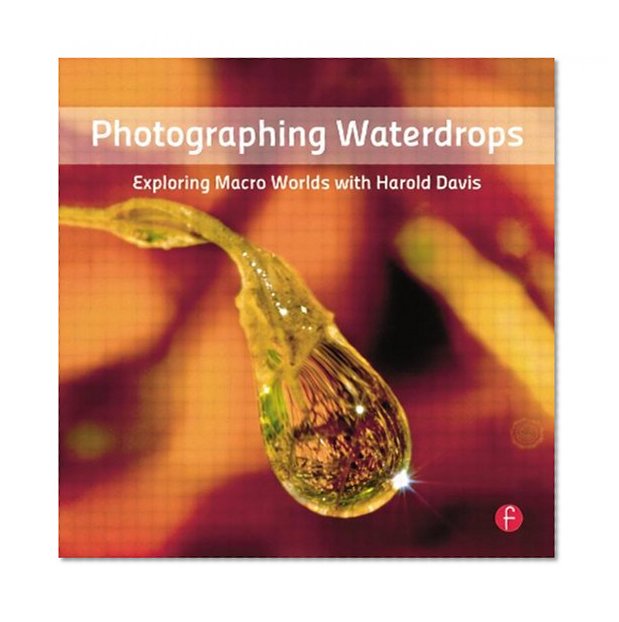
Waterdrop Photos and Their Stories, by Harold Davis
At Home in the UniverseAt Home in the Universe
To create this partially abstract image, I used a 50mm macro lens to shoot 21 exposures of a wet spider web in the early morning sun. Most of the shots were underexposed to bring out the color saturation in the individual waterdrops, and to let the background go dark.Using layer stacking in Photoshop, I combined these 21 exposures into the composite image you see here.
Some of the waterdrops in this image are quite clearly and literally waterdrops for example, the droplet shown with a sunburst on the lower right. However, it is not hard to imagine that one is looking at something completely different, maybe outer space or DNA strands.
Moisture on a spider web is an endlessly fascinating subject for photography, and interesting images can vary from the abstract to extremely literal, with a great deal of visual and compositional interest no matter which way you decide to go!
Piggyback WaterdropPiggyback Waterdrop
Out to photograph after a sudden spring shower, I was struck by the way this waterdrop piggybacked on the leaf, presenting a complex but simple structure with outer framing, and also the framing of the leaf within the leaf. The very defined lines of the leaves contrasted nicely with the somewhat refracted and slightly curved lines shown through the largest waterdrop.
I shot this interesting composition with a 200mm telephoto macro lens, so I could get some distance from the subject while still making a close-up photo. That way, my reflection didn t appear in the image.
Proteus WaterdropsProteus Waterdrops
From a normal point of view, a wet flower in the rain looks sensuous, and smooth. With this extreme macro shot of a proteus Scarlet ribbons the kind of flower you might often see at a high-end florist you can clearly see little spikey hairs along with the red ribbons that give the flower its name. Close-up, the reality is different and a little more intricate than waterdrops seen from a distance. This is one of the reasons I enjoy photographing waterdrops on flowers.
To make this extreme macro shot, I used a 105mm telephoto macro lens with a 36mm extension tube, both mounted on my tripod. With my gear in place, I waited for a break in the wind so I could make a fairly long exposure (1.3 seconds) without the waterdrops or the flower moving in the breeze.
A Letter to Amazon.com Readers from Harold Davis
Dear Amazon.com Reader:
I want to tell you about my book, Photographing Waterdrops: Exploring Macro Worlds with Harold Davis. If you are thinking about ordering purchasing this book, it might help you to know how I came to create it, and what you ll find in it.
The first thing that you should know is that Photographing Waterdrops is a true labor of love. For me, there is nothing in the world like a rainstorm. Water is nature s way of refreshing and replenishing, and as I write in my book, without water, and waterdrops, we would have a barren planet devoid of life. As long as there are waterdrops, there is hope for our environment.
The poet William Blake wrote about worlds in a grain of sand, and waterdrops are tiny worlds not much larger than Blake s grain of sand. These are wet worlds that follow their own rules. Inside a waterdrop you ll see the play of light, shadow, color and focus. The skin of the waterdrop reflects our own world back at us.
I have been photographing waterdrops after the rain, and in fields in the morning dew, for many years. As I ve said, this is because I love the way waterdrops look, the way they reflect sunshine, their brief lifespan, and the message of possibility the waterdrop conveys in a world beset by global warming.
Natural waterdrops, meaning those found outdoors in morning dew or following rain, are one of the most technically demanding kinds of subjects for macro photography.
First, they are often very, very small. Natural waterdrops are not photographed in a controlled environment. There s only so much you can do about the lighting. If there is even the slightest breeze, the surface of the waterdrop is in constant motion. And here s the clincher: the reflective, convex surface of the waterdrop means that if you are not very, very careful you, your camera and lens, and your tripod appear in the waterdrop, spoiling the naturalism of the subject matter.
All of this is described in Photographing Waterdrops, and I explain how to overcome these technical photographic hurdles when photographing natural waterdrops outdoors. Along the way, my book covers macro gear, exposure issues, depth-of-field, sharpness, and post-production. In other words, if you want to learn about macro photography generally you ll find plenty of information here.
With Photographing Waterdrops, you get two books in one: an ode to the joy that is in each waterdrop world, and in-depth technical descriptions that show you how to go about making your own waterdrop photos.
I truly hope you enjoy Photographing Waterdrops: Exploring Macro Worlds with Harold Davis as much as I ve enjoyed creating it.
Best wishes in photography,