Search Books
The History of Development … The Familiar and the Unfami…

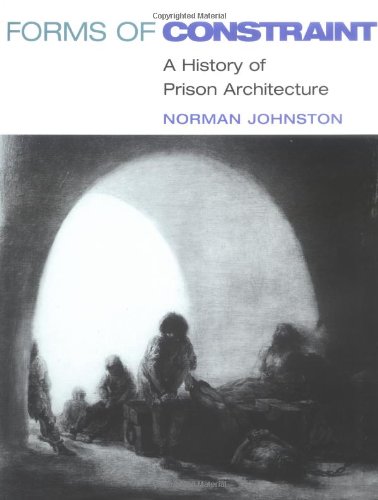
Forms of Constraint: A HISTORY OF PRISON ARCHITECTURE

Author Norman Johnston
Publisher University of Illinois Press
Category Architecture
📄 Viewing lite version Full site ›
🌎 Shop on Amazon — choose country
34.95 USD
🛒 Buy New on Amazon 🇺🇸 🏷 Buy Used — $11.85
Share:
Book Details
ISBN / ASIN0252025571
ISBN-139780252025570
Sales Rank2,255,679
CategoryArchitecture
MarketplaceUnited States 🇺🇸

Description

From musty medieval dungeons to modern electronically surveyed and controlled concrete cellblocks, prison architecture reveals much about how a society sees fit to control and contain those who transgress its boundaries. "Forms of Constraint" is the first general volume to consider how prison design has evolved over the centuries, how it has taken shape in various corners of the globe, and how it reflects the society that oversees it. Rigorously documented and generously illustrated, "Forms of Constraint" surveys prison architecture from earliest times to the present. Embedding his discussion of architectural detail in a history of social ideas about prisoners and imprisonment, criminologist Norman Johnston considers the architectural design and features of prisons in light of the purposes they were meant to serve. He demonstrates how cycles of humane concern and reform efforts alternate and sometimes coexist with periods of impatience with the criminal justice process and a desire to make imprisonment rigorous and unpleasant. Johnston describes the preferred types of prison layout in various eras and locations. He assesses the success or failure of building elements in fulfilling goals such as prisoner isolation, segregation by gender or by severity of crime, adequate hygiene, rehabilitative activities ranging from religious instruction to vocational training, and surveillance of prisoners and guards. As goals and the consequent demands on the physical structure changed, new templates for the ideal prison emerged. Johnston traces the gradual rise of prison design as an architectural speciality and profiles the central early figures and organizations devoted to the field, including William Blackburn, the first architect to specialize in prison design; John Haviland, architect of the influential Pennsylvania prison style; and Jeremy and Samuel Bentham, who conceived the much-discussed but never built Panopticon. He describes changes in prison design as architecture and penal philosophy leadership passed from one country to another. He also provides broad coverage of penal methods and prison architecture around the world, from Rio to Beijing and from Oslo to St. Petersburg.
Architecture and Modern Literature
View
Meggs' History of Graphic Design
View
Creating a Life Together: Practical Tools to Grow Ecov…
View
Theories and History of Architecture
View
Optical System Design, Second Edition
View
Chinese Style: Interiors, Furnitures, Details
View
Hallowed Timbers: The Wooden Churches of Cape Breton
View
An Introduction to Enterprise Architecture
View