Beginning in 1172, Judah ibn Tibbon, who was called the father of Hebrew translators, wrote a letter to his son that was full of personal and professional guidance. The detailed letter, described as an ethical will, was revised through the years and offered a vivid picture of intellectual life among Andalusi elites exiled in the south of France after 1148. S. J. Pearce sets this letter into broader context and reads it as a document of literary practice and intellectual values. She reveals how ibn Tibbon, as a translator of philosophical and religious texts, explains how his son should make his way in the family business and how to operate, textually, within Arabic literary models even when writing for a non-Arabic audience. While the letter is also full of personal criticism and admonitions, Pearce shows ibn Tibbon making a powerful argument in favor of the continuation of Arabic as a prestige language for Andalusi Jewish readers and writers, even in exile outside of the Islamic world.
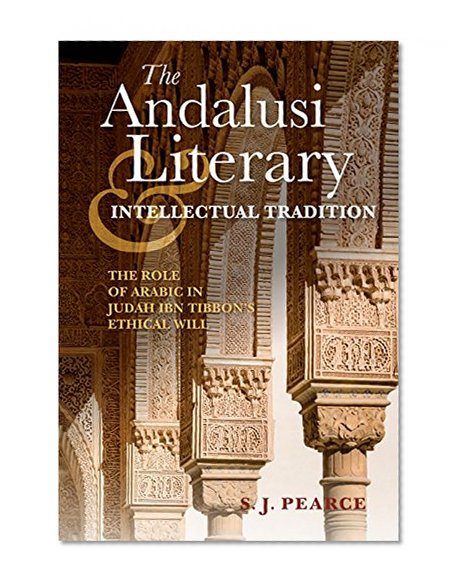
The Andalusi Literary and Intellectual Tradition: The Role of Arabic in Judah ibn Tibbon's Ethical Will (Sephardi and Mizrahi Studies)
📄 Viewing lite version
Full site ›
Book Details
Author(s)Pearce, Sarah J.
PublisherIndiana University Press
ISBN / ASIN0253025966
ISBN-139780253025968
AvailabilityTemporarily out of stock.
Sales Rank3,547
CategoryLiterary Criticism
MarketplaceUnited States 🇺🇸
Description ▲
More Books in Literary Criticism
Egyptian Literature
View
Utopia Paraiso E Historia: Inscripciones Del Mito En G…
View
Nation, State, and Empire in English Renaissance Lite…
View
On the Outskirts of Form: Practicing Cultural Poetics
View
Genre at the Crossroads: The Challenge of Fantasy
View
Profiles in Canadian Drama: James Reaney
View
Monty Python, Shakespeare and English Renaissance Drama
View
Modes of Faith: Secular Surrogates for Lost Religious …
View
Latino Los Angeles in Film and Fiction: The Cultural P…
View
Emerson's Ghosts: Literature, Politics, and the Making…
View