These studies of Colombian economic, political, and social institutions offer not only theoretically grounded analyses but also practical recommendations for policy reform. Experts from the United States, Europe, and Colombia approach such problems as executive-legislative branch conflict, fragmented political parties, crime prevention, inefficient decentralization, and mistargeted social spending from a political economics perspective. Their findings provide an illuminating example of the way ideas from this relatively new area of research can be applied to real-world problems.Colombia suffers not only from institutional problems -- many of which may stem from its overly rigid 1991 constitution -- but also high rates of violent crime, endemic drug trafficking, guerrilla warfare, and political corruption; the authors do not shrink from these topics, but treat them for the most part from an institutional perspective. Following a useful overview of recent economic history in Colombia, three chapters examine political institutions, discussing separation of powers, Colombia's complicated electoral and political party system, and reform of the judicial system. The remaining chapters treat economic and social institutions, covering the fiscal imbalance of centralized taxing and decentralized spending, transparent and fiscally responsible budget processes, education reform, the provision of social services, and the advantages of an independent central bank. Each chapter includes specific policy proposals that are politically feasible and require minimal legislative action. The proposed solutions to Colombia's institutional problems also shed light on similar problems in other developing countries.
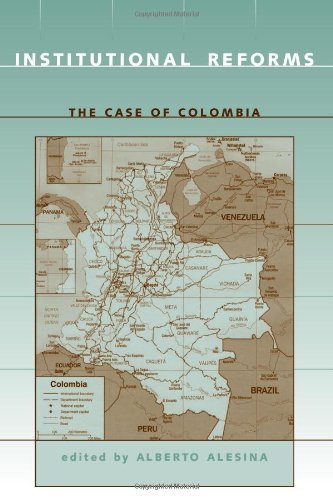
Institutional Reforms: The Case of Colombia (The MIT Press)
📄 Viewing lite version
Full site ›
Book Details
Author(s)Alesina, Alberto
PublisherThe MIT Press
ISBN / ASIN0262012146
ISBN-139780262012140
AvailabilityIn Stock.
Sales Rank5,585,676
MarketplaceUnited States 🇺🇸