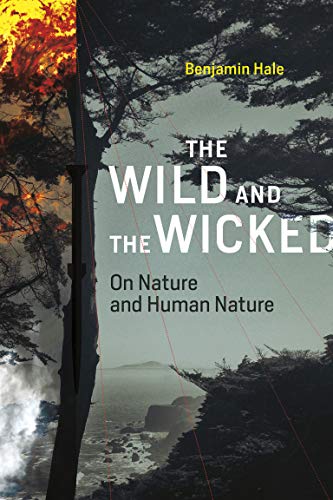
A brief foray into a moral thicket, exploring why should protect nature despite tsunamis, malaria, bird flu, cancer, killer asteroids, and tofu.
Most of us think that in order to be environmentalists, we have to love nature. Essentially, we should be tree huggers -- embracing majestic redwoods, mighty oaks, graceful birches, etc. We ought to eat granola, drive hybrids, cook tofu, and write our appointments in Sierra Club calendars. Nature's splendor, in other words, justifies our protection of it. But, asks Benjamin Hale in this provocative book, what about tsunamis, earthquakes, cancer, bird flu, killer asteroids? They are nature, too.
For years, environmentalists have insisted that nature is fundamentally good. In The Wild and the Wicked, Benjamin Hale adopts the opposite position -- that much of the time nature can be bad -- in order to show that even if nature is cruel, we still need to be environmentally conscientious. Hale argues that environmentalists needn't feel compelled to defend the value of nature, or even to adopt the attitudes of tree-hugging nature lovers. We can acknowledge nature's indifference and periodic hostility. Deftly weaving anecdote and philosophy, he shows that we don't need to love nature to be green. What really ought to be driving our environmentalism is our humanity, not nature's value.
Hale argues that our unique burden as human beings is that we can act for reasons, good or bad. He claims that we should be environmentalists because environmentalism is right, because we humans have the capacity to be better than nature. As humans, we fail to live up to our moral potential if we act as brutally as nature. Hale argues that despite nature's indifference to the plight of humanity, humanity cannot be indifferent to the plight of nature.