Search Books
Twenty-First Century Ecosys… An Assessment of the Scienc…

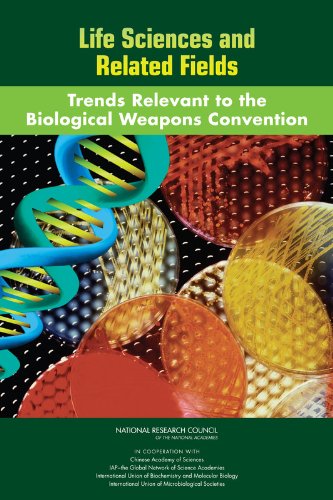
Life Sciences and Related Fields: Trends Relevant to the Biological Weapons Convention

Author Committee on Trends in Science and Technology Relevant to the Biological Weapons Convention: An International Workshop, Board on Life Sciences, Division on Earth and Life Studies, National Research Council, Chinese Academy of Sciences, IAP--The Global Net
Publisher National Academies Press
Category Science
📄 Viewing lite version Full site ›
🌎 Shop on Amazon — choose country
28.51 42.00 USD
🛒 Buy New on Amazon 🇺🇸 🏷 Buy Used — $68.95

✓ Usually ships in 24 hours

Share:
Book Details
ISBN / ASIN0309210712
ISBN-139780309210713
AvailabilityUsually ships in 24 hours
Sales Rank6,572,977
CategoryScience
MarketplaceUnited States 🇺🇸

Description

During the last decade, national and international scientific organizations have become increasingly engaged in considering how to respond to the biosecurity implications of developments in the life sciences and in assessing trends in science and technology (S&T) relevant to biological and chemical weapons nonproliferation. The latest example is an international workshop, Trends in Science and Technology Relevant to the Biological Weapons Convention, held October 31 - November 3, 2010 at the Institute of Biophysics of the Chinese Academy of Sciences in Beijing.

Life Sciences and Related Fields summarizes the workshop, plenary, and breakout discussion sessions held during this convention. Given the immense diversity of current research and development, the report is only able to provide an overview of the areas of science and technology the committee believes are potentially relevant to the future of the Biological and Toxic Weapons Convention (BWC), although there is an effort to identify areas that seemed particularly ripe for further exploration and analysis. The report offers findings and conclusions organized around three fundamental and frequently cited trends in S&T that affect the scope and operation of the convention:

  • The rapid pace of change in the life sciences and related fields;
  • The increasing diffusion of life sciences research capacity and its applications, both internationally and beyond traditional research institutions; and
  • The extent to which additional scientific and technical disciplines beyond biology are increasingly involved in life sciences research.


The report does not make recommendations about policy options to respond to the implications of the identified trends. The choice of such responses rests with the 164 States Parties to the Convention, who must take into account multiple factors beyond the project's focus on the state of the science.
Studies on Cercospora and Allied Genera (Mycological P…
View
Gliomastix Gueguen (Mycological Paper)
View
A Revision of the Genus Ascotricha Berk (Mycological P…
View
Ustilaginales of the British Isles (Plant Science / Ho…
View
Witches' Broom Disease of Cacao (Phytopathological Pap…
View
The Concept of Vertical and Horizontal Resistance as I…
View
Sex, Drugs and Chocolate
View
Big Bang: The Origin of the Universe
View
Big Bang: The Origin of the Universe
View