- get started and sustain progress with classroom-tested strategies for implementing, teaching, and refining high-quality instruction
- make direct connections between theory and practice through planning questions
- conduct meaningful assessment with sample rubrics.
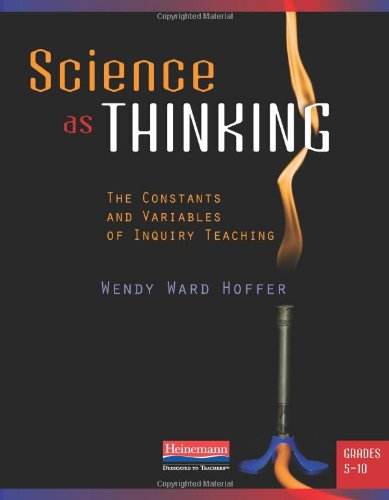
Science as Thinking: The Constants and Variables of Inquiry Teaching, Grades 5-10
📄 Viewing lite version
Full site ›
Book Details
Author(s)Wendy Ward Hoffer
PublisherHeinemann
ISBN / ASIN0325025770
ISBN-139780325025773
AvailabilityUsually ships in 24 hours
Sales Rank1,120,934
CategoryEducation
MarketplaceUnited States 🇺🇸
Description ▲
 You are about to immerse yourself in a gorgeously readable and engaging account of how teachers can move science instruction from “hands on to minds on.†Wendy Ward Hoffer describes how teachers can extrapolate what is known about good thinking strategies instruction to science teaching and learning. Hoffer illuminates the path for thousands of teachers (in science and beyond) who today work with those who will lead this country's efforts in energy, health care, the exploration of sea and space, and the protection of our planet. What work is more vital to our future? - Ellin Oliver KeeneCoauthor of Mosaic of Thought, Second Edition This book by an experienced teacher takes professional development to a new level. Many authors of books designed to improve education try to integrate best research with best practice. Few succeed as well as Wendy Hoffer. - J. Myron AtkinStanford University Inquiry is how we learn about the world. Every day we ask questions, gather evidence, make observations, and draw conclusions. Science as Thinking shows how powerful instruction can connect the natural curiosity students bring to class to the science curriculum. Wendy Ward Hoffer uses the fundamental scientific principles of constants and variables as a framework for highly effective science teaching. She begins with constants, the basics of science instruction: Inquiry, Big Ideas, Workshop, Assessment, Culture. Hoffer shows how building a teaching foundation on these constants ensures that all of your planning, lessons, and interactions spark students' interests and support deep thinking about science. Hoffer's variables are the practices you select from every day - labs, demonstrations, lectures, projects, and other classroom staples. She illustrates how these variables can be carefully manipulated to maximize student engagement, thinking, and understanding. Science as Thinking is a wonderful resource for new teachers, but it will just as soon be sticky-noted and dog-eared by veterans. It helps you:
More Books in Education
Conceptual Physics & Prs $20 Rebate Card Pk
View
Routledge Library Editions: Education Mini-Set H Histo…
View
Emotional and Behavioural Difficulties (Special Educat…
View
Linear Equations, Inequalities, & Functions
View
Unfulfilled Expectations: Home and School Influences o…
View
Study Guide for Foundations of Economics plus MyEconLa…
View
Question Answer Relationships: A Simple Taxonomy of Qu…
View
Routledge Library Editions: Education Mini-Set A: Comp…
View
Routledge Library Editions: Education Mini-Set A: Comp…
View