The most influential unpublished work in the history of psychology. When Carl Jung embarked on an extended self-exploration he called his “confrontation with the unconscious,” the heart of it was The Red Book, a large, illuminated volume he created between 1914 and 1930. Here he developed his principle theories—of the archetypes, the collective unconscious, and the process of individuation—that transformed psychotherapy from a practice concerned with treatment of the sick into a means for higher development of the personality.
While Jung considered The Red Book to be his most important work, only a handful of people have ever seen it. Now, in a complete facsimile and translation, it is available to scholars and the general public. It is an astonishing example of calligraphy and art on a par with The Book of Kells and the illuminated manuscripts of William Blake. This publication of The Red Book is a watershed that will cast new light on the making of modern psychology.
212 color illustrations.
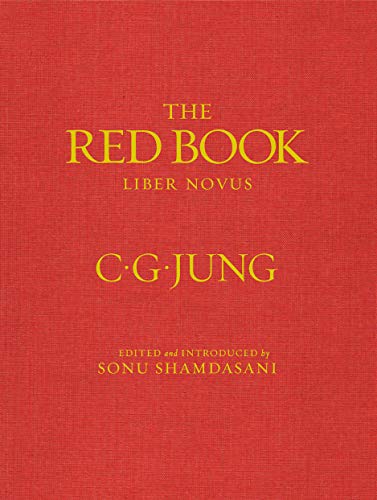
The Red Book (Philemon)
📄 Viewing lite version
Full site ›
Book Details
Author(s)C. G. Jung
PublisherW. W. Norton & Company
ISBN / ASIN0393065677
ISBN-139780393065671
AvailabilityIn Stock.
Sales Rank39,694
MarketplaceUnited States 🇺🇸
Description ▲
Similar Products ▼
- The Red Book: A Reader's Edition (Philemon)
- Reading The Red Book: An Interpretive Guide to C.G. Jung's Liber Novus
- The Art of C. G. Jung
- Man and His Symbols
- Psychology and Alchemy (Collected Works of C.G. Jung Vol.12)
- The Psychology of Kundalini Yoga
- Modern Man In Search of a Soul
- Memories, Dreams, Reflections
- Aion: Researches into the Phenomenology of the Self (Collected Works of C.G. Jung Vol.9 Part 2)
- Synchronicity: An Acausal Connecting Principle. (From Vol. 8. of the Collected Works of C. G. Jung) (Jung Extracts)