Well, almost nobody. John Gardner understands him. Gardner's sympathetic On Becoming a Novelist is the novelist's ultimate comfort food--better than macaroni and cheese, better than chocolate. Gardner, a fiction writer himself (Grendel), knows in his bones the desperate questioning of a writer who's not sure he's up to the task. He recognizes the validation that comes with being published, just as he believes that "for a true novel there is generally no substitute for slow, slow baking." Gardner also has strong feelings about what kinds of workshops help (and whom they help), and what kinds hinder. But a full half of Gardner's book is devoted to an exploration of the writer's nature. The storyteller's intelligence, he says, "is composed of several qualities, most of which, in normal people, are signs of either immaturity or incivility." In addition, a writer needs "verbal sensitivity, accuracy of eye," and "an almost demonic compulsiveness." But wait--there's more. A writer needs to be driven, and to be driven, he says insightfully, "a psychological wound is helpful." --Jane Steinberg
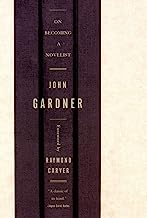
On Becoming a Novelist
📄 Viewing lite version
Full site ›
Book Details
Author(s)John Gardner
PublisherW. W. Norton & Company
ISBN / ASIN0393320030
ISBN-139780393320039
AvailabilityIn Stock.
Sales Rank183,089
CategoryLanguage Arts & Disciplines
MarketplaceUnited States 🇺🇸
Description ▲
Picture the poor, young, serious-fiction writer. He toils alone at a pace not so different from that of Lincoln Tunnel traffic at rush hour in New York. His spouse has a "real" job, or perhaps he has a trust fund. His college friends are cashing in on their dot-coms and wondering if he's ever going to join the real world. He is not hell-bent on publication; he is trying to write "serious, honest fiction, the kind of novel that readers will find they enjoy reading more than once, the kind of fiction likely to survive." He's likely to have no idea whether he's succeeding. Nobody understands him.
More Books in Language Arts & Disciplines
The Quest for Charisma: Christianity and Persuasion
View
Read the Way You Talk: A Guide for Lectors
View
Focus on the Caribbean (Varieties of English Around th…
View
How to Write a Novel; A Practical Guide to the Art of …
View
How to Write and Sell Mystery Fiction
View
Politically Speaking: A Worldwide Examination of Langu…
View
The Memoir Book
View
The Subjunctive in the Age of Prescriptivism: English …
View
Invisible Acts of Power: Channeling Grace in Your Ever…
View