First published in 1973, this seventh printing of a A Random Walk looks forward and does so broadly, examining a new range of investment choices facing the turn-of-the-century investor: money-market accounts, tax-exempt funds, Roth IRAs, and equity REITs, as well as the potential benefits and pitfalls of the emerging global economy. In his updated "life-cycle guide to investing," Malkiel offers age-related investment strategies that consider one's capacity for risk. (A 30-year-old who can depend on wages to offset investment losses has a different risk capacity from a 60-year-old.) In his assessment of rocketing Internet stocks, Malkiel defends his "random" position well, explaining how "the market eventually corrects any irrationality--albeit in its own slow, inexorable fashion. Anomalies can crop up, markets can get irrationally optimistic, and often they attract unwary investors. But eventually, true value is recognized by the market, and this is the main lesson investors must heed." Written for the financial layperson but bolstered by 30 years of research, A Random Walk will help individual investors take charge of their financial future. Recommended. --Rob McDonald
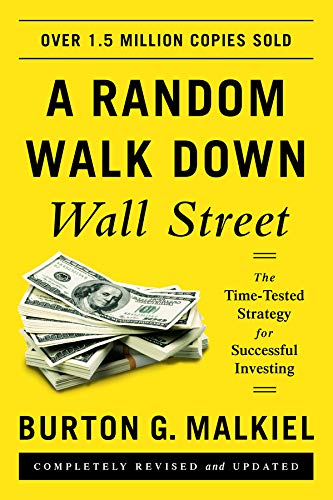
A Random Walk Down Wall Street: The Time-Tested Strategy for Successful Investing
📄 Viewing lite version
Full site ›
Book Details
Author(s)Malkiel, Burton G.
PublisherW. W. Norton & Company
ISBN / ASIN0393340740
ISBN-139780393340747
AvailabilityIn Stock
Sales Rank732
CategoryBusiness & Economics
MarketplaceUnited States 🇺🇸
Description ▲
It's unlikely that you'll spot many dog-eared copies of A Random Walk floating amongst the Wall Street set (although bookshelves at home may prove otherwise). After all, a "random walk"--in market terms--suggests that a "blindfolded monkey" would have as much luck selecting a portfolio as a pro. But Burton Malkiel's classic investment book is anything but random. Since stock prices cannot be predicted in the short term, argues Malkiel, individual investors are better off buying and holding onto index funds than meddling with securities or actively managing mutual funds. Not only will a broad range of index funds outperform a professionally managed portfolio in the long run, but investors can avoid expense charges and trading costs, which decrease returns.
Similar Products ▼
- The Intelligent Investor: The Definitive Book on Value Investing. A Book of Practical Counsel (Revised Edition) (Collins Business Essentials)
- Money, Banking and Financial Markets
- Common Sense on Mutual Funds: Fully Updated 10th Anniversary Edition
- One Up On Wall Street: How To Use What You Already Know To Make Money In The Market
- The Bogleheads' Guide to Investing
- Beyond Greed and Fear: Understanding Behavioral Finance and the Psychology of Investing (Financial Management Association Survey and Synthesis)
- Against the Gods: The Remarkable Story of Risk
- The Little Book of Common Sense Investing: The Only Way to Guarantee Your Fair Share of Stock Market Returns (Little Books. Big Profits)
- If You Can: How Millennials Can Get Rich Slowly
More Books in Business & Economics
Business Cycles and Forecasting
View
Development Economics: Its Position in the Present Sta…
View
Cost Systems Design
View
So You Want to Dance on Broadway
View
The Blueprint: Reviving Innovation, Rediscovering Risk…
View
Managing IT Outsourcing, Second Edition
View
Education and the Creation of Capital in the Early Ame…
View
Global Corruption Report 2005: Special Focus: Corrupti…
View
More Tales for Trainers: Using Stories and Metaphors t…
View