“A loud counterblast to the fashionable faith of our times: that human nature is driven by biology . . . urgent and persuasive.”―Sunday Times (London)
In this era of genome projects and brain scans, it is all too easy to overestimate the role of biology in human psychology. But in this passionate corrective to the idea that DNA is destiny, Jesse Prinz focuses on the most extraordinary aspect of human nature: that nurture can supplement and supplant nature, allowing our minds to be profoundly influenced by experience and culture. Drawing on cutting-edge research in neuroscience, psychology, and anthropology, Prinz shatters the myth of human uniformity and reveals how our differing cultures and life experiences make each of us unique. Along the way he shows that we can’t blame mental illness or addiction on our genes, and that societal factors shape gender differences in cognitive ability and sexual behavior. A much-needed contribution to the nature-nurture debate, Beyond Human Nature shows us that it is only through the lens of nurture that the spectrum of human diversity becomes fully and brilliantly visible.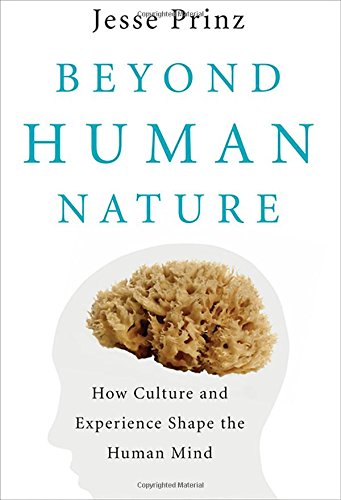
Beyond Human Nature: How Culture and Experience Shape the Human Mind
📄 Viewing lite version
Full site ›
Book Details
Author(s)Prinz, Jesse J.
PublisherW. W. Norton & Company
ISBN / ASIN0393347893
ISBN-139780393347890
AvailabilityIn Stock.
Sales Rank1,135,910
CategoryPsychology
MarketplaceUnited States 🇺🇸
Description ▲
Similar Products ▼
- Behave: The Biology of Humans at Our Best and Worst
- Dreaming: A Very Short Introduction
- Strangers to Ourselves: Discovering the Adaptive Unconscious
- Incognito: The Secret Lives of the Brain
- Anatomy of an Epidemic: Magic Bullets, Psychiatric Drugs, and the Astonishing Rise of Mental Illness in America
- Clash!: How to Thrive in a Multicultural World
- Wired for Culture: Origins of the Human Social Mind
- Just Babies: The Origins of Good and Evil
- Rethinking Psychological Anthropology: Continuity and Change in the Study of Human Action, Second Edition
- The Blank Slate: The Modern Denial of Human Nature
More Books in Psychology
Creative Therapy: Activities with Children and Adolesc…
View
Therapy in the Real World: Effective Treatments for Ch…
View
Cognition: Theory and Practice
View
Give Back the Pain: Emotional Healing through Source C…
View
Mindfulness and Schema Therapy: A Practical Guide
View
Supervision as Collaboration in the Human Services: Bu…
View
Genes and Behavior: Nature-Nurture Interplay Explained
View
Antisocial Behavior
View