Nestle, nutrition chair at New York University and editor of the 1988 Surgeon General Report, has served her time in the dietary trenches and is ideally suited to revealing how government nutritional advice is watered down when a message might threaten industry sales. (Her report on byzantine nutritional food-pyramid rewordings to avoid "eat less" recommendations is both predictable and astonishing.) She has other "war stories," too, that involve marketing to children in school (in the form of soft-drink "pouring rights" agreements, hallway advertising, and fast-food coupon giveaways), and diet-supplement dramas in which manufacturers and the government enter regulation frays, with the industry championing "free choice" even as that position counters consumer protection. Is there hope? "If we want to encourage people to eat better diets," says Nestle, "we need to target societal means to counter food industry lobbying and marketing practices as well as the education of individuals." It's a telling conclusion in an engrossing and masterfully panoramic exposé. --Arthur Boehm
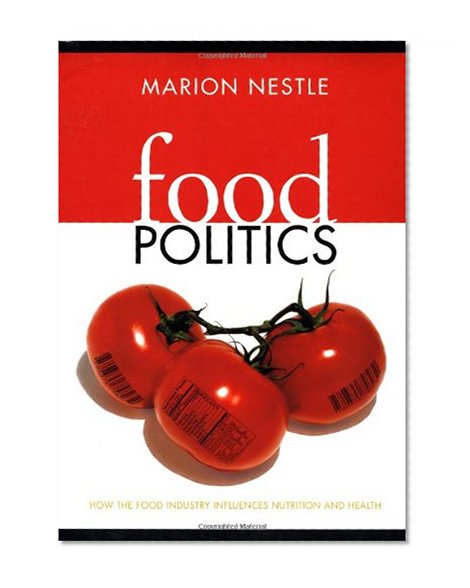
Food Politics: How the Food Industry Influences Nutrition and Health (California Studies in Food and Culture)
📄 Viewing lite version
Full site ›
Book Details
Author(s)Marion Nestle
PublisherUniversity of California Press
ISBN / ASIN0520224655
ISBN-139780520224650
Sales Rank562,928
CategoryCooking
MarketplaceUnited States 🇺🇸
Description ▲
In the U.S., we're bombarded with nutritional advice--the work, we assume, of reliable authorities with our best interests at heart. Far from it, says Marion Nestle, whose Food Politics absorbingly details how the food industry--through lobbying, advertising, and the co-opting of experts--influences our dietary choices to our detriment. Central to her argument is the American "paradox of plenty," the recognition that our food abundance (we've enough calories to meet every citizen's needs twice over) leads profit-fixated food producers to do everything possible to broaden their market portion, thus swaying us to eat more when we should do the opposite. The result is compromised health: epidemic obesity to start, and increased vulnerability to heart and lung disease, cancer, and stroke--reversible if the constantly suppressed "eat less, move more" message that most nutritionists shout could be heard.
More Books in Cooking
Chinese Kosher Cooking
View
Modern Caribbean Cuisine
View
Triumph of the Lentil: Soy-Free Vegan Wholefoods for a…
View
The Ultimate Recipe Book: 50 Classic Dishes and the St…
View
Gadgetology: Kitchen Fun with Your Kids, Using 35 Cook…
View
The Bride's Cook Book
View
A Glossary of Food Science and Technology
View
Culinary Fundamentals with Study Guide
View
Grow Your Own Vegetables; A Practical Handbook For All…
View