Generation Priced Out is a call to action on one of the most talked-about issues of our time: how skyrocketing rents and home values are pricing the working and middle classes out of urban America. Randy Shaw tells the powerful stories of tenants, politicians, homeowner groups, developers, and activists in over a dozen cities impacted by the national housing crisis. From San Francisco to New York, Seattle to Denver, and Los Angeles to Austin, Generation Priced Out challenges progressive cities to reverse rising economic and racial inequality.
Shaw exposes how boomer homeowners restrict millennials’ access to housing in big cities, a generational divide that increasingly dominates city politics. Shaw also demonstrates that neighborhood gentrification is not inevitable and presents proven measures for cities to preserve and expand their working- and middle-class populations and achieve more equitable and inclusive outcomes. Generation Priced Out is a must-read for anyone concerned about the future of urban America.
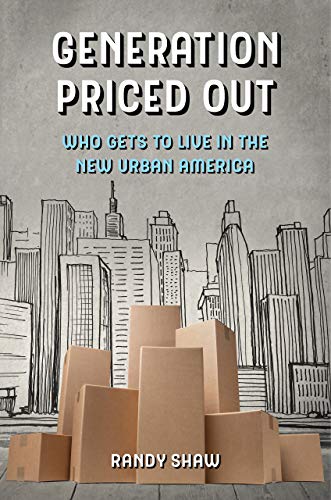
Generation Priced Out: Who Gets to Live in the New Urban America
📄 Viewing lite version
Full site ›
Book Details
Author(s)Shaw, Randy
PublisherUniversity of California Press
ISBN / ASIN0520299124
ISBN-139780520299122
AvailabilityIn Stock.
Sales Rank400,869
MarketplaceUnited States 🇺🇸
Description ▲
Similar Products ▼
- Capital City: Gentrification and the Real Estate State (Jacobin)
- The Divided City: Poverty and Prosperity in Urban America
- Segregation by Design: Local Politics and Inequality in American Cities
- Silicon City: San Francisco in the Long Shadow of the Valley
- Order without Design: How Markets Shape Cities (The MIT Press)
- Walkable City Rules: 101 Steps to Making Better Places
- The Color of Law: A Forgotten History of How Our Government Segregated America
- The Code of Capital: How the Law Creates Wealth and Inequality
- The New Urban Crisis: How Our Cities Are Increasing Inequality, Deepening Segregation, and Failing the Middle Class-and What We Can Do About It
- How to Kill a City: Gentrification, Inequality, and the Fight for the Neighborhood