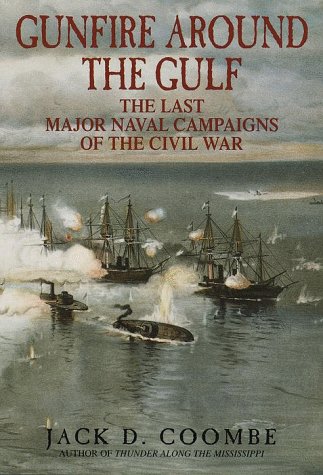
Gunfire Around the Gulf: The Last Major Naval Campaigns of the Civil War
📄 Viewing lite version
Full site ›
Book Details
Author(s)Jack Coombe
PublisherBantam
ISBN / ASIN0553107313
ISBN-139780553107319
AvailabilityUsually ships in 24 hours
Sales Rank4,907,567
MarketplaceUnited States 🇺🇸
Description ▲
At the start of the Civil War, strategists for both the North and South understood the supreme importance of the seas. In Gunfire Around the Gulf, author Jack D. Coombe (Thunder Along the Mississippi) suggests that the War Between the States may in fact have been decided by the largely uncelebrated naval actions in the Gulf of Mexico. "One could argue that the defeats in the Gulf constituted the nadir of the Confederacy itself. The closing of such important and vital ports as New Orleans, Mobile, and Galveston isolated it from the rest of the world and kept vital sustaining material from reaching its armies and its populace," he writes. Coombe's main character is Admiral David Glasgow Farragut, the Union commander lauded as "the shining example of what a good leader should be, in the tradition of a Lord Nelson or a John Paul Jones." He credits Farragut with disproving "the old dictum that wooden ships could not go against stone forts" and win. Coombe is not a mere chronicler of men and events, but a sharp interpreter of why events unfolded the way they did. Just as Confederate troops on land benefited from exceptional military leadership, he notes, the Southern navy had innovation on its side: underwater mines (called "torpedoes") sank or damaged 33 Union vessels. But it was handicapped, too, by a debilitating command structure that crippled its ability to wage war on the seas. Elements of the Confederate navy outlasted Lee's surrender at Appomattox, but, as Coombe shows, Farragut and his Union sailors had delivered a death-blow long before then. --John J. Miller