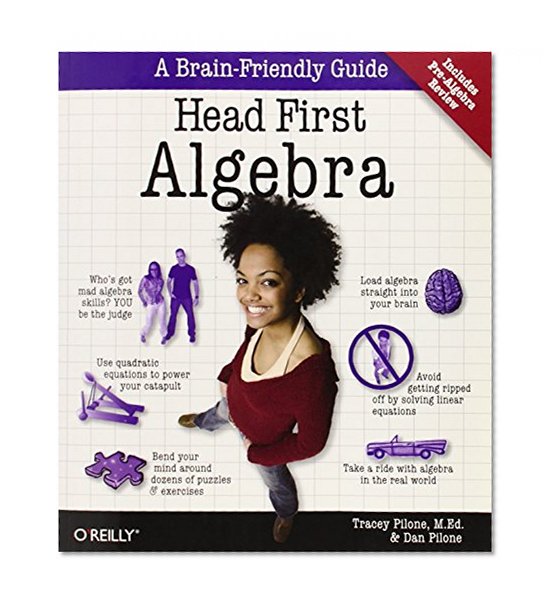
Right after you tell someone that you’re writing a math book, that’s what half the people tell you. Why is that? You never hear somebody say “I’m not a history person.” They’ll just say “I don’t like history.” It says to me that people think it’s something wrong with them, not the subject.
Why is that important? Because it means that helping learners struggling with math is equal parts working on the material and working on the learner. In order to really get the learner engaged, you first have to fix the math issues that they have.
Where do math issues come from?
Math study is sequential.If you have problem with understanding a concept with addition, then you’re going to have trouble with subtraction and multiplication. So if you have a problem with Algebra, it’s going to follow you through Geometry, Algebra 2, Trigonometry, and the fact is that unless you go back and relearn the concept that is missing, there will be problems showing up in your work and it will be really hard to find the root cause.
Through elementary school, here’s how math progresses:
Pretty intuitive in the beginning (adding and subtracting you can do with blocks and it makes total sense).
Then “math” goes into the land of times tables, division, more multiplication (this time with two places), more division (this time with two places), and it tends to get...well...Boring! So by the time you start Algebra, you’re already saying, "I'm not a math person."
The problem is that Algebra is where mathematics really starts, although a bunch of people are already turned off. In Algebra you’re learning how to apply logic, how to construct a real problem in the math world, and seeking a solution to things that you can’t do in your head. You can write out the situation as you know it, and following Algebraic principles, get to the answer. The answer is something that you can actually use. You learn the process and understand the relationship that the equation, inequality, functions, or graph represents; and how to manipulate it. EVERYBODY is a math person; you just might not know it yet. Doesn’t mean that everybody is going to love it, go out and become a math major, but it means that everyone can work with math and use it out there in the world. Because you’ll need to. Unless you plan to never spend any money or put anything together with tools, you’re going to need math to help you. And there is no reason why everyone can’t get there. They just have to start by thinking they can.