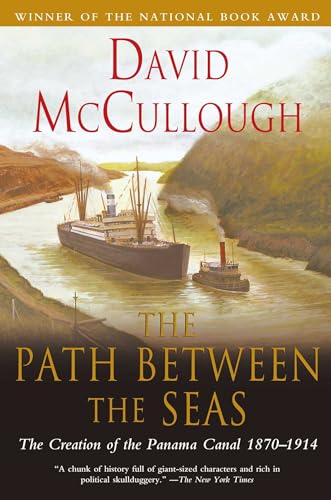
All that changed, writes David McCullough in his magisterial history of the Canal, in 1848, when prospectors struck gold in California. A wave of fortune seekers descended on Panama from Europe and the eastern United States, seeking quick passage on California-bound ships in the Pacific, and the Panama Railroad, built to serve that traffic, was soon the highest-priced stock listed on the New York Exchange. To build a 51-mile-long ship canal to replace that railroad seemed an easy matter to some investors. But, as McCullough notes, the construction project came to involve the efforts of thousands of workers from many nations over four decades; eventually those workers, laboring in oppressive heat in a vast malarial swamp, removed enough soil and rock to build a pyramid a mile high. In the early years, they toiled under the direction of French entrepreneur Ferdinand de Lesseps, who went bankrupt while pursuing his dream of extending France's empire in the Americas. The United States then entered the picture, with President Theodore Roosevelt orchestrating the purchase of the canal--but not before helping foment a revolution that removed Panama from Colombian rule and placed it squarely in the American camp.
The story of the Panama Canal is complex, full of heroes, villains, and victims. McCullough's long, richly detailed, and eminently literate book pays homage to an immense undertaking. --Gregory McNamee