Shirin himself was a thickset man with a reddish crew cut, always badly shaved and wearing large spectacles behind which, as in two aquariums, swam two tiny, transparent eyes--which were completely impervious to visual impressions. He was blind like Milton, deaf like Beethoven, and a blockhead to boot.Of course, only a fraction of The Gift is taken up with this sort of demolition derby. Fyodor's romance with Zina, for example, occasions the most ardent prose of Nabokov's career: "And not only was Zina cleverly and elegantly made to measure for him by a very painstaking fate, but both of them, forming a single shadow, were made to the measure of something not quite comprehensible, but wonderful and benevolent and continuously surrounding them." (Shades of Volodya and Véra? Only the deceased husband and wife, and perhaps Stacy Schiff, know for sure.)
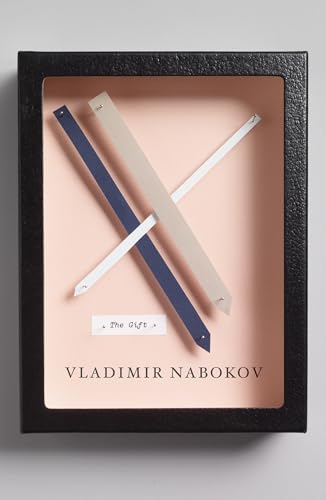
At the same time, The Gift is a brilliant, mesmerizing riff on the history of Russian literature, with elaborate bouquets tossed to Pushkin and Gogol. There's also a hilarious yet somehow tender evisceration of the do-gooding polemicist Nikolai Chernyshevski--which was suppressed, in fact, when the novel was originally serialized by a Russian émigré magazine. As should be clear by now, The Gift defies any attempt at quick-and-dirty summary. But the book plays the most pleasurable kind of havoc with our stuffy notions of narrative structure and linguistic protocol. And as Nabokov repeatedly wraps the reader's consciousness around his little finger, he never holds back on that ultimate literary gift: pleasure. --James Marcus