Search Books
Powerplay: The Origins of t… The China Model: Political …

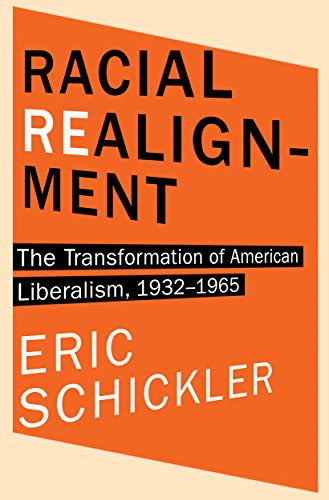
Racial Realignment: The Transformation of American Liberalism, 1932-1965 (Princeton Studies in American Politics: Historical, International, and Comparative Perspectives)

Author Eric Schickler
Publisher Princeton University Press
Category POLITICAL SCIENCE
📄 Viewing lite version Full site ›
🌎 Shop on Amazon — choose country
31.44 35.00 USD
🛒 Buy New on Amazon 🇺🇸 🏷 Buy Used — $32.33

✓ Usually ships in 24 hours

Share:
Book Details
ISBN / ASIN0691153884
ISBN-139780691153889
AvailabilityUsually ships in 24 hours
Sales Rank357,370
MarketplaceUnited States 🇺🇸

Description

Few transformations in American politics have been as important as the integration of African Americans into the Democratic Party and the Republican embrace of racial policy conservatism. The story of this partisan realignment on race is often told as one in which political elites--such as Lyndon Johnson and Barry Goldwater--set in motion a dramatic and sudden reshuffling of party positioning on racial issues during the 1960s. Racial Realignment instead argues that top party leaders were actually among the last to move, and that their choices were dictated by changes that had already occurred beneath them. Drawing upon rich data sources and original historical research, Eric Schickler shows that the two parties' transformation on civil rights took place gradually over decades.

Schickler reveals that Democratic partisanship, economic liberalism, and support for civil rights had crystallized in public opinion, state parties, and Congress by the mid-1940s. This trend was propelled forward by the incorporation of African Americans and the pro-civil-rights Congress of Industrial Organizations into the Democratic coalition. Meanwhile, Republican partisanship became aligned with economic and racial conservatism. Scrambling to maintain existing power bases, national party elites refused to acknowledge these changes for as long as they could, but the civil rights movement finally forced them to choose where their respective parties would stand.

Presenting original ideas about political change, Racial Realignment sheds new light on twentieth and twenty-first century racial politics.

The Civic Organization and the Digital Citizen: Commun…
View
Foreign Policy Breakthroughs: Cases in Successful Dipl…
View
Vanguard of the Imam: Religion, Politics, and Iran's R…
View
Fed Power: How Finance Wins
View
Imperialism Past and Present
View
We Are the Ones We Have Been Waiting For: The Promise …
View
The Subjectivity Of Participation: Articulating Social…
View
Transforming Social Work Practice: Postmodern Critical…
View
Security Unbound: Enacting Democratic Limits (Critical…
View