The subjugation of Native Americans by European immigrants grew out of a violent clash of cultures that, in retrospect, hid real opportunities for peaceful coexistence. Key elements of this tragic tale can clearly be seen in Yasuhide Kawashima's chronicle of the events surrounding a criminal trial in Puritan New England-perhaps the earliest landmark case in American law.
In 1675, Wampanoag Indian John Sassamon was allegedly ambushed and murdered on his way home from Plymouth, where he had warned the colonists about his people's plan to attack them. An investigation led to the trial and execution of three Indians based on the testimony of only one suspect witness. The verdict aggravated tensions between Indians and settlers and ultimately ignited King Philip's War, after which Indians were subjugated, their villages effectively became reservations, and all hope of bicultural existence vanished.
Although it is usually considered from a political or cultural standpoint, Kawashima retells the story of the murder and trial from the perspective of legal history and overlapping jurisdictions. He shows that Plymouth's aggressive extension of its legal authority marked the end of four decades of legal coexistence between Indians and colonists, ushering in a new era of cultural and legal imperialism.
Kawashima views this seminal legal conflict as a reflection of much larger cultural differences between the two groups. Within that context, however, he also questions the validity of the proceedings themselves. In the end, Kawashima suggests, the murder verdict was a rush to judgment that rested on the shaky foundations of neglected forensic evidence as well as procedural violations of colonial law that ignored the rights of the accused. That decision marked a turning point in Euro-Indian relations and set the pattern for the ultimate marginalization of all Indians in North America. Kawashima's explication of those events casts history in a new light and shows us the critical importance of this landmark case.
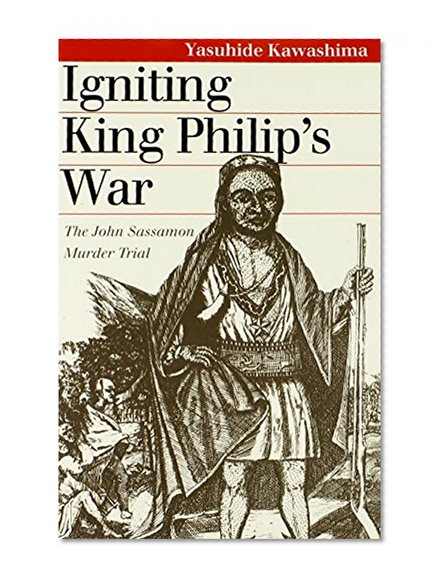
Igniting King Philip's War: The John Sassamon Murder Trial
📄 Viewing lite version
Full site ›
Book Details
Author(s)Yasuhide Kawashima
PublisherUniv Pr of Kansas
ISBN / ASIN0700610936
ISBN-139780700610938
AvailabilityUsually ships in 24 hours
Sales Rank1,303,239
CategoryHistory
MarketplaceUnited States 🇺🇸
Description ▲
More Books in History
The Bet, and Other Stories
View
Pakistan and the Bomb: Public Opinion and Nuclear Opti…
View
Writing National Histories: Western Europe Since 1800
View
Empire in Eclipse
View
Monks and Laymen in Byzantium, 843-1118
View
The Wilmington and Western Railroad (Images of Rail: D…
View
Black Sailor, White Navy: Racial Unrest in the Fleet d…
View
Feasibility of Laser Power Transmission to a High-Alti…
View
The Democratic Republic: 1801-1815
View