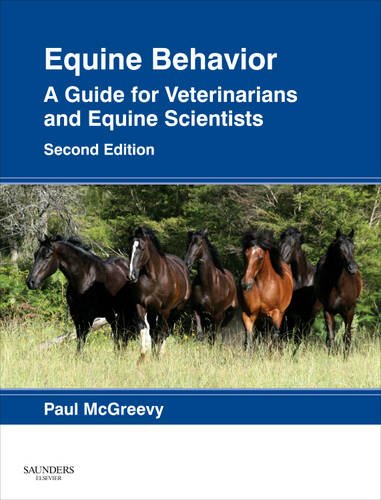
Equine Behavior: A Guide for Veterinarians and Equine Scientists is written for all those who really want to know what makes horses tick. Behavioral problems in the stable and under saddle are of concern to equine veterinarians worldwide because they lead to welfare issues, abuse and ultimately wastage. Equine veterinarians, trainers and handlers must be aware of each horse's behavior as a first step in detection of problems, whether they are clinical maladies or training issues. As they constantly study their horses' responses to their environments they are all, in effect, students of horse behavior.
Drawing on over 1,000 references, Equine Behavior explores the subject from first principles by considering the behavior of free-ranging horses and considering ways in which management and training influences the responses of domestic horses. All too often veterinarians feel that management of the mental health of equine patients is beyond their expertise. This book addresses many important gaps to enable practitioners to understand how horses can learn to perform unwelcome behaviors and how to change those behaviors where appropriate.
The new edition builds on the success of its pioneering predecessor and presents a thorough revision of all chapters to reflect the latest developments in this dynamic field. The chapter on equitation science has been expanded and there have been major revisions to the sections on stereotypic behavior, cognition studies, nutrition and housing. The book remains a must-have purchase for all veterinarians who deal with horses, for equine scientists, trainers and everybody with an interest in the subject.
- Features a practical, hands-on approach to all aspects of equine behavior
- Discusses all factors that effect equine behavior
- Contrasts normal behavior with abnormal behavior
- Reviews all behavioral problems
- Lists and reviews the latest drug therapies
- Addresses difficult-to-treat clinical problems such as head-shaking, with insights from the leading researcher in this area
- Provides a brief clinical evaluation of 'horse-whispering'
- Illustrates the key behavioral differences between horses and donkeys