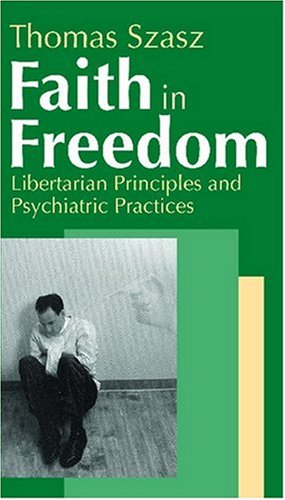
The libertarian philosophy of freedom is characterized by two fundamental beliefs: self-ownership is a basic right, and initiating violence is a fundamental wrong. Psychiatric practice violates both of these beliefs. It is based on the assumptions that self-ownership--epitomized by suicide--is a medical wrong, and that initiating violence against persons called "mental patients" is a medical right. Thomas Szasz raises fundamental questions about these assumptions. Are self-medication and self-determined death exercises of rightful self-ownership, or manifestations of serious mental diseases? Does deprivation of human liberty under psychiatric auspices constitute odious preventive detention, or is it therapeutically justified hospitalization? Should forced psychiatric drugging be interpreted as assault and battery on the person, or is it medical treatment?
The ethical standards of psychiatric practice mandate that psychiatrists coerce certain innocent persons. Abstaining from such "intervention" is considered malpractice--dereliction of the psychiatrists' "duty to protect." This duty reflects the fact that psychiatry is an arm of the coercive apparatus of the state, converting it to an institution Thomas Szasz calls "psychiatric slavery." How should friends of freedom--especially libertarians--deal with the conflict between elementary libertarian principles and prevailing psychiatric practices? In Faith in Freedom: Libertarian Principles and Psychiatric Practices, Szasz addresses this question. After examining the theoretical underpinnings of the problem, with precision, he presents several analytical studies.
Expanding on ideas first developed in the groundbreaking and controversial works The Myth of Mental Illness, Ceremonial Chemistry, and Liberation by Oppression, Faith in Freedom is a strikingly original book, written by one of the foremost champions of psychiatric freedom. It will be of lasting interest to psychiatrists, sociologists, mental health practitioners, and students of political science.