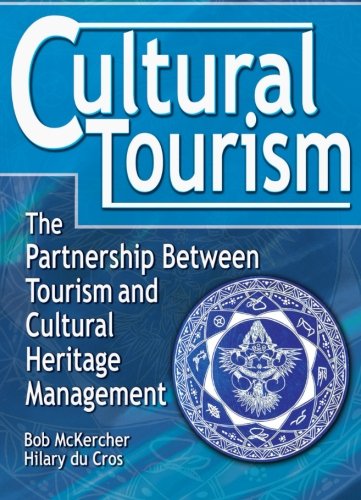
Examine cultural tourism issues from both sides of the industry!Unique in concept and content, Cultural Tourism: The Partnership Between Tourism and Cultural Heritage Management examines the relationship between the sectors that represent opposite sides of the cultural tourism coin. While tourism professionals assess cultural assets for their profit potential, cultural heritage professionals judge the same assets for their intrinsic value. Sustainable cultural tourism can only occur when the two sides form a true partnership based on understanding and appreciation of each other's merits. The authors--one, a tourism specialist, the other, a cultural heritage management expert--present a model for a working partnership with mutual benefits, integrating management theory and practice from both disciplines.Cultural Tourism is the first book to combine the different perspectives of tourism management and cultural heritage management. It examines the role of tangible (physical evidence of culture) and intangible (continuing cultural practices, knowledge, and living experiences) heritage, describes the differences between cultural tourism products and cultural heritage assets, and develops a number of conceptual models, including a classification system for cultural tourists, indicators of tourism potential at cultural and heritage assets, and assessment criteria for cultural and heritage assets with tourism potential. Cultural Tourism examines the five main constituent elements involved in cultural tourism:
- cultural and heritage assets in tourism sites such as the Royal Palace in Bangkok, the Cook Islands, and Alcatraz Prison in San Francisco.
- tourism--what it is, how it works, and what makes it a success
- five different types of cultural tourists
- consumption of products, value adding, and commodification
- integrating the first four elements to satisfy the tourist, meet the needs of the tourism industry, and conserve the intrinsic value of the asset
Though tourism and cultural heritage management professionals have mutual interests in the management, conservation, and presentation of cultural and heritage assets, the two sectors operate on parallel planes, maintaining an uneasy partnership with surprisingly little dialogue. Cultural Tourism provides professionals and students in each field with a better understanding of their own roles in the partnership, bridging the gap via sound planning, management, and marketing to produce top-quality, long-lasting cultural tourism products.
Now translated into simplified Chinese.