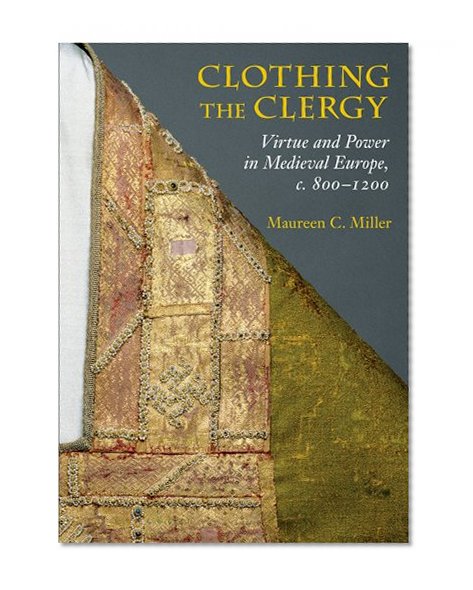
After initial ambivalence about distinctive garb for its ministers, early Christianity developed both liturgical garments and visible markers of clerical status outside church. From the ninth century, moreover, new converts to the faith beyond the Alps developed a highly ornate style of liturgical attire; church vestments were made of precious silks and decorated with embroidered and woven ornament, often incorporating gold and jewels. Making use of surviving medieval textiles and garments; mosaics, frescoes, and manuscript illuminations; canon law; liturgical sources; literary works; hagiography; theological tracts; chronicles, letters, inventories of ecclesiastical treasuries, and wills, Maureen C. Miller in Clothing the Clergy traces the ways in which clerical garb changed over the Middle Ages.
Miller's in-depth study of the material culture of church vestments not only goes into detail about craft, artistry, and textiles but also contributes in groundbreaking ways to our understanding of the religious, social, and political meanings of clothing, past and present. As a language of power, clerical clothing was used extensively by eleventh-century reformers to mark hierarchies, to cultivate female patrons, and to make radical new claims for the status of the clergy. The medieval clerical culture of clothing had enduring significance: its cultivation continued within Catholicism and even some Protestant denominations and it influenced the visual communication of respectability and power in the modern Western world. Clothing the Clergy features seventy-nine illustrations, including forty color photographs that put the rich variety of church vestments on display.