Search Books

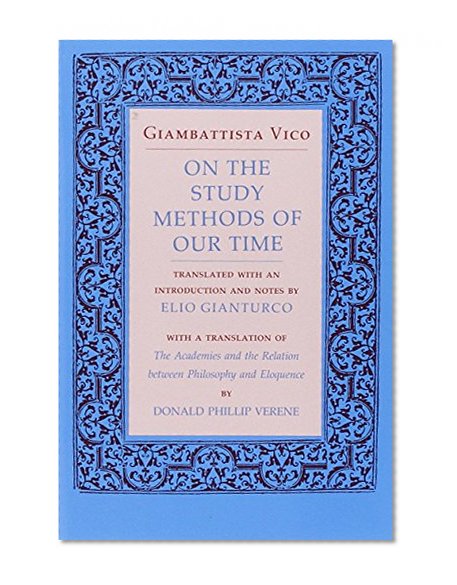
On the Study Methods of Our Time

Author Giambattista Vico
Publisher Cornell University Press
📄 Viewing lite version Full site ›
🌎 Shop on Amazon — choose country
18.95 USD
🛒 Buy New on Amazon 🇺🇸 🏷 Buy Used — $4.95

✓ Usually ships in 24 hours

Share:
Book Details
ISBN / ASIN0801497787
ISBN-139780801497780
AvailabilityUsually ships in 24 hours
Sales Rank669,408
MarketplaceUnited States 🇺🇸

Description

Giambattista Vico's first original work of philosophy, On the Study Methods of Our Time (1708–9) takes up the contemporary "quarrel between the ancients and the moderns" and provides a highly interesting statement of the nature of humanistic education. This edition makes available again Elio Gianturco's superb 1965 English translation of a work generally regarded as the earliest statement by Vico of the fundamentals of his position.

An important contribution to the development of the scientism-versus-humanism debate over the comparative merits of classical and modern culture, this book lays out Vico's powerful arguments against the compartmentalization of knowledge which results from the Cartesian world view. In opposition to the arid logic of Cartesianism, Vico here celebrates the humanistic tradition and posits the need for a comprehensive science of humanity which recognizes the value of memory and imagination.

For this edition, Donald Phillip Verene has written a new preface placing the work in the context of the ongoing renaissance in Vico studies and added a chronology of Vico's major writings. He has also translated into English for the first time Vico's last public statement, The Academies and the Relation between Philosophy and Eloquence (1737), a short oration that presents his final views on wisdom, the unity of knowledge, and rhetoric―themes he had first adumbrated in the Study Methods.

On the Study Methods of Our Time remains a key text for anyone interested in the development's of Vico's thought and serves as a concise introduction to his work. Scholars and students in such disciplines as the history of philosophy, intellectual history, literary theory, rhetoric, and the history and philosophy of education will find this volume helpful and fascinating.