Search Books

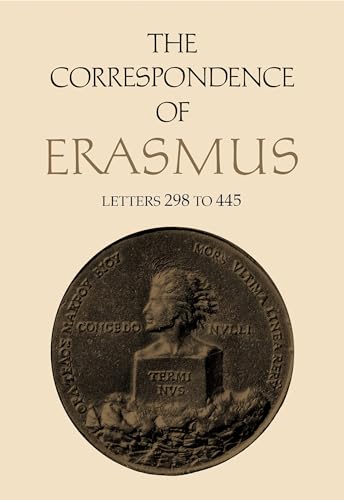
The Correspondence of Erasmus: Letters 298-445 (1514-1516) (Collected Works of Erasmus)

Author Desiderius Erasmus
Publisher University of Toronto Press, Scholarly Publishing Division
📄 Viewing lite version Full site ›
🌎 Shop on Amazon — choose country
99.75 105.00 USD
🛒 Buy New on Amazon 🇺🇸 🏷 Buy Used — $88.55

✓ Usually ships in 24 hours

Share:
Book Details
ISBN / ASIN0802022022
ISBN-139780802022028
AvailabilityUsually ships in 24 hours
Sales Rank4,050,174
MarketplaceUnited States 🇺🇸

Description

Volume 3 contains Erasmus' surviving correspondence from August 1514 to August 1516, including one letter by Erasmus never before published in a collection of his correspondence. There are one hundred and fifty–one letters from this period, more than survive from the whole of the first forty years of his life. They range in character from hasty personal notes to extended formal treatises, and they appear with remarkable regularity. This closely woven and uniform fabric of evidence coincides with the moment in Erasmus' career that marks his departure from England and his reception on the international stage of European intellectual life. As a result we have the sense of meeting the mature Erasmus poised and confident about his future and career.

When Eramus left England for Basel, he entered into an association with the printer whose household was to be the nearest thing to a spiritual home that he would ever know. And from the firm of Froben in the next two years were to appear those great works which were largely the fruit of Erasmus' labours in England – the revised Adagiorum chiliades, the edition of the letters of St Jerome, the new edition and the translation of the New Testament, and the Institutio principis christiani Together they confirmed his place at the summit of European leanring, as his new home in the Upper Rhine symbolized Erasmus' central position in the religious controversy about to divide Europe.

In the words of P.S. Allen, "Eramsmus had now reached his highest point. He had equipped himself thoroughly for the work he desired to do. He was the acknowledged leader of a large band of scholars, who looked to him for guidance and were ready to second his efforts; and with the resources of Froben's press at his disposal, nothing seemed beyond his powers and his hopes."