Search Books

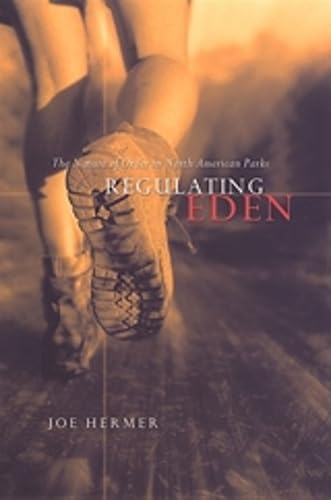
Regulating Eden: The Nature of Order in North American Parks

Author Hermer, Joe
Publisher University of Toronto Press, Scholarly Publishing Division
📄 Viewing lite version Full site ›
🌎 Shop on Amazon — choose country
74.05 USD
🛒 Buy New on Amazon 🇺🇸

✓ In stock. Usually ships within 4 to 5 days.

Share:
Book Details
Author(s)Hermer, Joe
ISBN / ASIN0802043585
ISBN-139780802043580
AvailabilityIn stock. Usually ships within 4 to 5 days.
Sales Rank12,274,032
MarketplaceUnited States 🇺🇸

Description

State and Provincial Parks are represented as inherently natural places set apart from the disorder of everyday life, places that are intrinsically 'wild' and must be protected. Yet, in order to experience the naturalness and freedom of the parks, we must embrace the very forms of regulation that we closely associate with places we consider to be artificial, restrictive, and alienating.

Drawing on a wide range of documents used to govern park jurisdictions, Joseph Hermer explores the character and consequences of the contradiction posed by the 'regulated Eden' of park destinations. Central to his analysis of parks as historically specific sites of governance is the notion of 'emparkment,' the practises and discourses that manufacture wildness and nature through specific forms of spatial and temporal regulation.

Using theoretical literature from the sociology of law and cultural geography, Hermer argues that emparkment order is driven primarily through discourses of both personal and environmental risk and results in an interdependency that generates powerful moralizing effects. He suggests that the mode of power constituted by emparkment is a mirror not only of how nature is configured in an era of environmental toxification, but also of how the experience of freedom itself is constructed in a society frequently characterized as repressive. Challenging us to re-think the place we have given to 'nature' in the protection of ecologically valuable landscapes, Hermer urges us to consider, too, the forms by which we govern ourselves in the moral order of daily life.