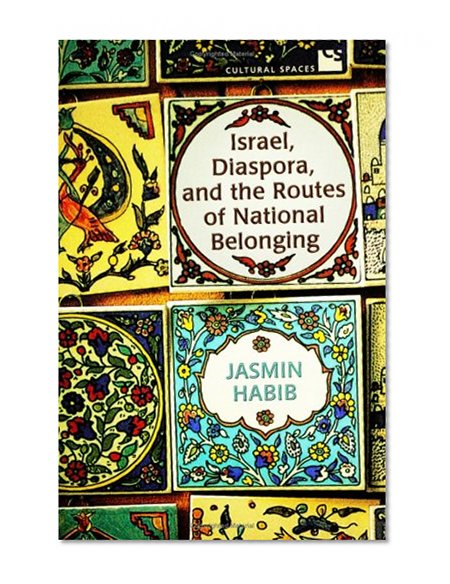
Many diasporic Jews have strong ties to Israel, but what does a diasporic nationalism mean, and is it necessarily tied to territory? Over the course of four years, Jasmin Habib was a participant observer on tours of Israel organized for diaspora Jews as well as at North American community events focusing on Israel and Israel-diaspora relations. During this time, Habib conducted extensive interviews with tourists and community members. The result is a startlingly honest, theoretically rich, and detailed analysis of official tour narratives and tourist interactions at a range of Israeli archaeological, historical, and military sites, as well as back home in North America.
In this first ethnographic account of North American diaspora Jews imagining and experiencing Israel, Habib blends anthropological, historical, and cultural studies theories together in an analysis of diaspora nationalism that has broad implications. Reflecting on her personal history as a peace activist of mixed Jewish and Palestinian parentage, Habib looks at community events in North America that celebrate the attachment and sense of obligation to Israel and Israeli Jews, and shares community members' multiple dialogues on the conflict between Israel and Palestine. What emerges from this compassionate exploration is Habib's provocative contention that much of the existing literature about North American Jews and their relationship to Israel ignores their diverse reactions to official narratives and perpetuates an "official silence" surrounding the destructive aspects of nationalist sentiments. As a result of this silence, Habib argues, Jewish studies has been unable to assert disciplinary autonomy from Zionist theory, and modernism, nation-building, and national territory have not been interrogated as analytical categories in these new geopolitical contexts.