Search Books

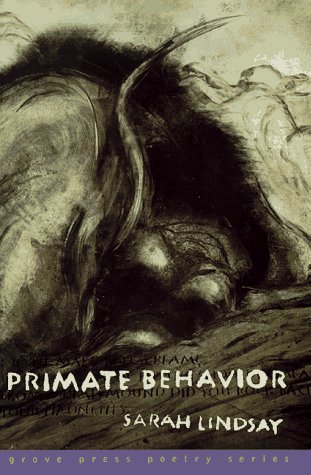
Primate Behavior: Poems (Grove Press Poetry Series)

Author Sarah Lindsay
Publisher Grove Press
📄 Viewing lite version Full site ›
🌎 Shop on Amazon — choose country
9.90 11.00 USD
🛒 Buy New on Amazon 🇺🇸 🏷 Buy Used — $0.01

✓ Usually ships in 24 hours

Share:
Book Details
Author(s)Sarah Lindsay
PublisherGrove Press
ISBN / ASIN0802135579
ISBN-139780802135575
AvailabilityUsually ships in 24 hours
Sales Rank1,747,757
MarketplaceUnited States 🇺🇸

Description

The explorers who start to guide us through Sarah Lindsay's fine and verdant book Primate Behavior are untrustworthy and quickly killed off. Instead of hearing the "safely delivered story" of the first poem, we experience "the fugue on the chaos theme" shot from a circus performer's "Continuum Ray." Lindsay deals in surreal contrivances but keeps her natural histories unwaveringly precise and, further, emotionally moving; witness the final lines of "Lungfish Conquers Depression":
She doesn't know
why this time she pushes past the surface tension
and wimples up the minute incline
on jellied stumps...
She feels a pocket
flex inside her neck, she gapes
at the scoured entry of demanding air.
Wallace Stevens's lush surface pleasures live in abundance here, enhanced by Lindsay's meticulous zoology. Yet more musician than scientist, she introduces a section called "Circus Merk" as "a figment ... named after the composer Joseph Merk, one of whose cello etudes sounded to me as I practiced like circus music." In the book's final poem, "Cheese Penguin," Lindsay brings back one last explorer, who steals penguin eggs for science and accidentally leaves a red tin of cheese behind, from which evolves a penguin made of cheese. The narrator shrugs it off, saying, "The world is large / and without a fuss has absorbed stranger things than this." With such comic understatements, Primate Behavior at times reads like T.S. Eliot referencing Buffon's Natural History instead of The Golden Bough. And like Eliot, Lindsay brings a noticeably new energy to contemporary poetry with this breakthrough book. --Edward Skoog