Prince of Pleasure is a lively biography, rich in anecdote, which provides a nuanced view of the monarch and statesman that hides nothing, but considers the flaws within the context of a nation where parliament and royalty maintained a delicate balance while revolutionary fervor swept many other countries. Drawing deeply upon contemporary sources, David is able to offer substantial detail on matters such as the prince's "secret" wedding to the Catholic widow Mrs. Fitzherbert, or his later, legally sanctioned matrimony to Princess Caroline of Brunswick, who so physically repulsed him that, after three instances of congress in the first two days of their marriage, he never went near her again. There is also much fine detail on the personal rifts between the prince and his father, and the ways in which that discord shaped Whig-Tory rivalries in the House of Commons. People fascinated by the stories surrounding the late 20th century's Prince of Wales will find his Hanoverian antecedent as compelling--probably more. --Ron Hogan
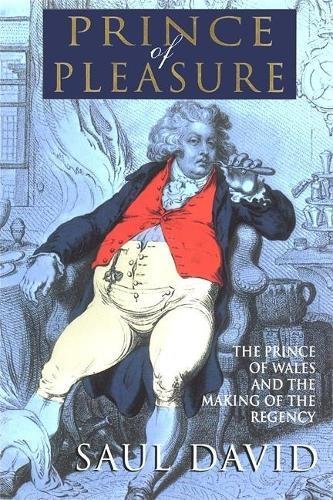
Prince of Pleasure: The Prince of Wales and the Making of the Regency
📄 Viewing lite version
Full site ›
Book Details
Author(s)David, Saul
PublisherGrove Press
ISBN / ASIN0802137032
ISBN-139780802137036
AvailabilityIn Stock.
Sales Rank1,794,332
MarketplaceUnited States 🇺🇸
Description ▲
When the future British monarch George IV (1762-1830) was a lad of 15, his head instructor predicted the Prince of Wales "will either be the most polished gentleman or the most accomplished blackguard in Europe, possibly an admixture of both." It was, as historian Saul David notes, "a particularly prescient remark." He is most popularly remembered for setting the pace for drunkenness and lechery among England's upper crust, not to mention his attempts to exploit the "madness" of his father, George III, for political gain (which would incidentally help him raise the money necessary to pay off his massive debts). But, David says, he was also a generous patron of the arts--responsible for, among other things, the establishment of the National Portrait Gallery--and played a critical role in the multinational campaign against Napoleon, thereby securing Britain's position of supremacy.