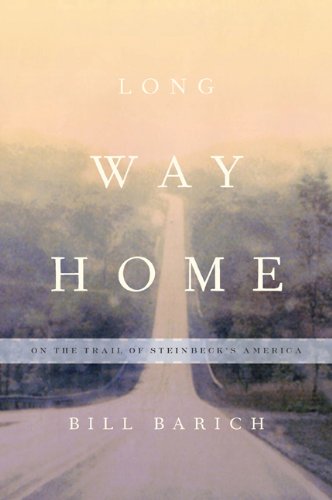
Long Way Home is the stunning result of his pilgrimage, an illuminating and perceptive portrait of America at a dramatic point in its history. Where Steinbeck returned from the road depressed about the country's soul, Barich—while not uncritical of the narrow-mindedness and incivility of our present culture—finds brightness among the dark and rekindles his belief in the long view, as exemplified by the unbridled optimism of some high school kids in Hutchinson, Kansas, and by the undaunted spirit of an eighty-year-old barber he chanced upon in Jefferson City, Missouri. "The world truly does renew itself while we're looking the other way," he observes.
From the Eastern Shore of Maryland to the spectacular landscape of Moab, Utah, to Steinbeck's own Salinas Valley, filled with memorable encounters and redolent with history and local color, Long Way Home is a truthful, inspiring account of the country at a social and political crossroad. "The highway snakes into a tunnel," Barich writes about a stretch of Route 50 in West Virginia, "then erupts into the light with the force of revelation."