At 14,110 feet, the weather station atop Pikes Peak, Colorado, was the highest in the world in 1873. Young men trained by the Signal Corps took turns living year-round on the isolated mountain, where they endured loneliness, primitive living conditions, lack of financial support and appreciation, and deteriorating health. Most did so with dedication and good humor. Some suffered frostbitten hands, feet and ears when they became lost on the snowy mountain trail; others were jolted by lightning strikes. One man eventually died; another, evidently unsuited to the solitary life, went mad.
Although weather records had been kept by private individuals and some universities since the early 1800s both here and abroad, a full U.S. weather reporting service had to await development and expansion of the electric telegraph. Both farmers and coastal shippers pressed the U.S. Congress to establish a weather prediction facility. By 1870 a network of such stations was in place. By late summer of 1873, workmen had finished the crude two-room station at the top of Pikes Peak. A telegraph line snaked through brush, trees, and boulders to the lofty summit.
When daily logs and research records were completed, some of the Pikes Peak weather men amused themselves by writing tall tales, expanding on their already unusual adventures. Americans loved their stories and seldom disavowed the truth of sea monsters in Pikes Peak lakes, plagues of mountain rats, and mysterious volcanic eruptions. Their problems with governmental bureaucracy were at once humorous and sad. With fortitude and imagination these early meteorologists laid the groundwork for today’s sophisticated science of data-gathering satellites and computer models.
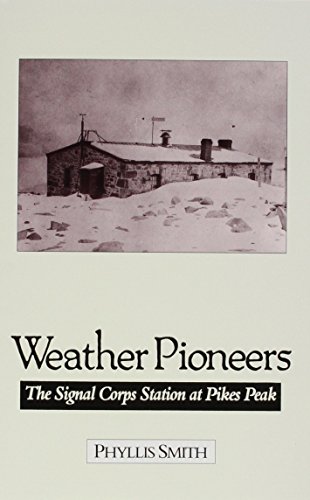
Weather Pioneers: The Signal Corps Station At Pike'S Peak
📄 Viewing lite version
Full site ›
Book Details
Author(s)Phyllis Smith
PublisherSwallow Press
ISBN / ASIN0804009694
ISBN-139780804009690
AvailabilityUsually ships in 24 hours
Sales Rank6,108,846
CategoryNature
MarketplaceUnited States 🇺🇸
Description ▲
More Books in Nature
The Quest For The Eastern Cougar: Extinction or Surviv…
View
A Spring without Bees: How Colony Collapse Disorder Ha…
View
Inferno (Bill and Alice Wright Photography)
View
Protecting New Jersey's Environment: From Cancer Alley…
View
Finding the Line: ordinary encounters in nature's mirr…
View
North Sea Climate: Based on observations from ships an…
View
Parrots: Lovebird, Parakeet, Kea, Monk Parakeet, Amazo…
View
The Politics and Economics of Park Management
View
Ignoring the Apocalypse: Why Planning to Prevent Envir…
View