Why did it take China more than a century after its defeat in the first Opium War to begin systematically acquiring the fruits of modern technology? To what extent did the rapid economic developments after 1949 depend on features unique to China and to Chinese history as well as on the socialist reorganization of society? These are the major questions examined in this collection of papers which challenges many previously accepted generalizations about the nature and extent of advances in China's economy during the twentieth century.
The papers discuss the positive and negative effects of foreign imperialism on Chinese economic development, the adequacy of China's financial resources for major economic initiatives, the state of science and technology in late traditional China, the changing structure of national product and distribution of income, the cotton textile and small machine-building industries as examples of pre-1949 economic bases, the village-market town structure of rural China, the tradition of cooperative efforts in agriculture, and the influence of the Yenan period on the economic thinking of China's leaders.
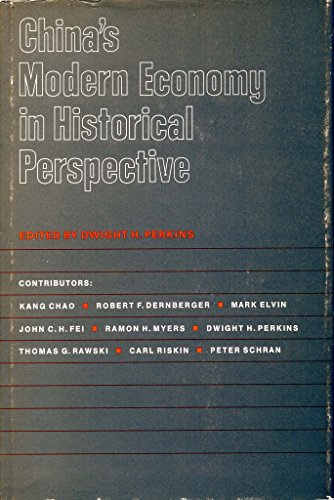
China’s Modern Economy in Historical Perspective
📄 Viewing lite version
Full site ›
Book Details
PublisherStanford University Press
ISBN / ASIN0804708711
ISBN-139780804708715
AvailabilityIn stock. Usually ships within 2 to 3 days.
Sales Rank2,766,363
CategoryBusiness & Economics
MarketplaceUnited States 🇺🇸
Description ▲
More Books in Business & Economics
Business Cycles and Forecasting
View
Development Economics: Its Position in the Present Sta…
View
Cost Systems Design
View
So You Want to Dance on Broadway
View
The Blueprint: Reviving Innovation, Rediscovering Risk…
View
Managing IT Outsourcing, Second Edition
View
Education and the Creation of Capital in the Early Ame…
View
Global Corruption Report 2005: Special Focus: Corrupti…
View
More Tales for Trainers: Using Stories and Metaphors t…
View
Advertising, Society and Consumer Culture
View