As early as the Warring States period in China (fourth through third centuries B.C.), debates arose concerning how and under what circumstances new institutions could be formed and legitimated. But the debates quickly encompassed more than just legitimation. Larger issues came to the fore: Can a sage innovate? If so, under what conditions? Where did human culture originally come from? Was it created by human sages? Is it therefore an artificial fabrication, or was it based in part on natural patterns? Is it possible for new sages to emerge who could create something better?
This book studies these debates from the Warring States period to the early Han (second century b.c.), analyzing the texts in detail and tracing the historical consequences of the various positions that emerged. It also examines the time's conflicting narratives about the origin of the state and how these narratives and ideas were manipulated for ideological purposes during the formation of the first empires.
While tracing debates over the question of innovation in early China, the author engages such questions as the prevailing notions concerning artifice and creation. This is of special importance because early China is often described as a civilization that assumed continuity between nature and culture, and hence had no notion of culture as a fabrication, no notion that the sages did anything other than imitate the natural world. The author concludes that such views were not assumptions at all. The ideas that human culture is merely part of the natural world, and that true sages never created anything but instead replicated natural patterns arose at a certain moment, then came to prominence only at the end of a lengthy debate.
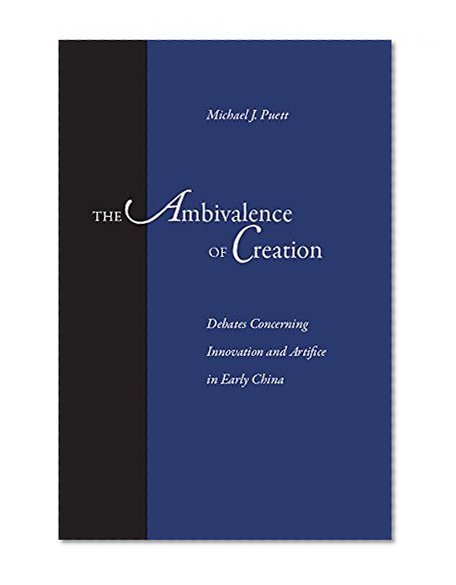
The Ambivalence of Creation: Debates Concerning Innovation and Artifice in Early China
📄 Viewing lite version
Full site ›
Book Details
Author(s)Michael Puett
PublisherStanford University Press
ISBN / ASIN0804736235
ISBN-139780804736237
AvailabilityUsually ships in 1 to 4 weeks
Sales Rank2,911,425
CategoryHistory
MarketplaceUnited States 🇺🇸
Description ▲
More Books in History
The Bet, and Other Stories
View
Pakistan and the Bomb: Public Opinion and Nuclear Opti…
View
Writing National Histories: Western Europe Since 1800
View
Empire in Eclipse
View
Monks and Laymen in Byzantium, 843-1118
View
The Wilmington and Western Railroad (Images of Rail: D…
View
Black Sailor, White Navy: Racial Unrest in the Fleet d…
View
Feasibility of Laser Power Transmission to a High-Alti…
View
The Democratic Republic: 1801-1815
View