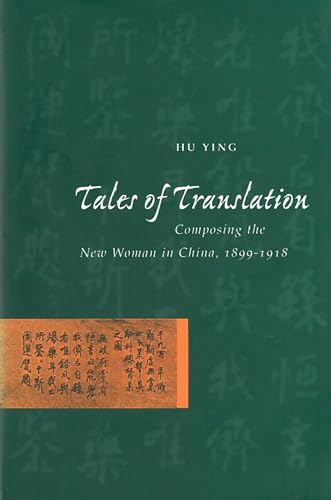
Tales of Translation: Composing the New Woman in China, 1899-1918
📄 Viewing lite version
Full site ›
Book Details
Author(s)Ying Hu
PublisherStanford University Press
ISBN / ASIN0804737746
ISBN-139780804737746
AvailabilityUsually ships in 2 to 4 weeks
Sales Rank3,616,494
CategoryLiterary Collections
MarketplaceUnited States 🇺🇸
Description ▲
The figure of the New Woman, soon to become a major signpost of Chinese modernity, was in the process of being composed at the turn of the twentieth century. This was a liminal moment in Chinese history, a period of great possibilities and much fluidity. At this time, the term xin n xin or xin fun (the New Woman) had not yet achieved currency, for she represented an ideal yet to be fully articulated. The cultural production of this period in China illustrates that the New Woman was constructed vis- -vis her significant "others," whether domestic or foreign, male or female. To know the New Woman, then, it is necessary to know not just herself but also her others. Instead of offering a model of Western influence or indigenous origin, this study employs a model of translation, in which both the self and the other are subject to multiple transformations. It reads several popular Chinese writers and translators of the period whose abundant fiction (whether original or translated) bristles with difficulties in presuming either fidelity of translation or adequacy of depicting cross-cultural experience in the construction of the New Woman. The late Qing era witnessed the translating, printing, and reading of a vast amount of Western literature, amounting to what has been called a "translation fever." The author focuses on the fictional and translational representation of a range of Western female icons, including Sophia Perovskaia (the Russian anarchist and would-be assassin of the tsar), the French Revolutionary figure Madame Roland, and Dumas's "la Dame aux cam lias." In tracing the circulation and transformation of these popular figures through travel books, biographies, newspaper articles, oral performance scripts, and novels, this book narrates the complex relationship between imagining a foreign other and re-imagining the self. In investigating the very processes of translation, it provides a sustained analysis of the cultural and historical forces that produced the New Woman in China.
More Books in Literary Collections
Natural History Of The Honeybee: Or Are Bees Reflex Ma…
View
The Spell of the Yukon and Other Verses
View
Death's Showcase: The Power of Image in Contemporary D…
View
Touching the Body: History, Language, & African Caribb…
View
Notes to the Complete Poetical Works of Percy Bysshe S…
View
Notes to the Complete Poetical Works of Percy Bysshe S…
View
Some Kind of Beautiful Signal (Two Lines World Writing…
View
Junonesia Or Women Rescued: A Treatise Relating To Pre…
View
On the Impending Bengal Famine; How It Will Be Met and…
View