Search Books

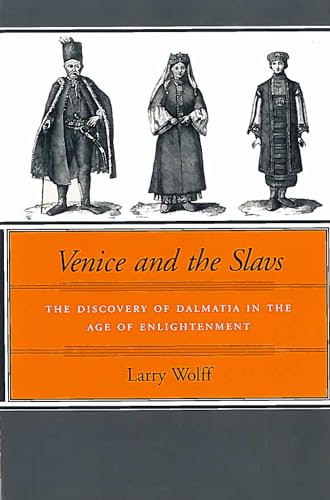
Venice and the Slavs: The Discovery of Dalmatia in the Age of Enlightenment

Author Larry Wolff
Publisher Stanford University Press
📄 Viewing lite version Full site ›
🌎 Shop on Amazon — choose country
26.75 30.95 USD
🛒 Buy New on Amazon 🇺🇸 🏷 Buy Used — $15.90

✓ Usually ships in 24 hours

Share:
Book Details
Author(s)Larry Wolff
ISBN / ASIN0804739463
ISBN-139780804739467
AvailabilityUsually ships in 24 hours
Sales Rank1,900,887
MarketplaceUnited States 🇺🇸

Description

This book studies the nature of Venetian rule over the Slavs of Dalmatia during the eighteenth century, focusing on the cultural elaboration of an ideology of empire that was based on a civilizing mission toward the Slavs. The book argues that the Enlightenment within the “Adriatic Empire” of Venice was deeply concerned with exploring the economic and social dimensions of backwardness in Dalmatia, in accordance with the evolving distinction between “Western Europe” and “Eastern Europe” across the continent. It further argues that the primitivism attributed to Dalmatians by the Venetian Enlightenment was fundamental to the European intellectual discovery of the Slavs.

The book begins by discussing Venetian literary perspectives on Dalmatia, notably the drama of Carlo Goldoni and the memoirs of Carlo Gozzi. It then studies the work that brought the subject of Dalmatia to the attention of the European Enlightenment: the travel account of the Paduan philosopher Alberto Fortis, which was translated from Italian into English, French, and German. The next two chapters focus on the Dalmatian inland mountain people called the Morlacchi, famous as “savages” throughout Europe in the eighteenth century. The Morlacchi are considered first as a concern of Venetian administration and then in relation to the problem of the “noble savage,” anthropologically studied and poetically celebrated. The book then describes the meeting of these administrative and philosophical discourses concerning Dalmatia during the final decades of the Venetian Republic. It concludes by assessing the legacy of the Venetian Enlightenment for later perspectives on Dalmatia and the South Slavs from Napoleonic Illyria to twentieth-century Yugoslavia.