After its independence in 1821, Mexico experienced more than fifty years of political chaos until Porfirio DÃaz assumed power in 1876. Thirty-five years later, Mexico entered another period of turbulent instability (1910-29), during which the country underwent a revolution, a counter-revolution, a counter-counter-revolution, three civil wars, and four violent coups or attempted coups. In both periods, governments repudiated debts, confiscated cash reserves, demanded forced loans, and engaged in the unrestrained printing of currency.
The governments that came to power after these bouts of instability faced a crucial dilemma. They needed resources in order to impose order, yet they lacked the ability to raise significant tax revenue. The answer was to borrow—but how did governments facing armed resistance and a real chance of being overthrown credibly promise to repay their debts?
Porfirio DÃaz’s strategy in the 1880s was to create a bank with a legal monopoly over lending to the federal government. DÃaz’s regime also enforced property rights to give elites tied to powerful local strongmen a stake in the political system. The threat of revolt by these strongmen assured politically connected local elites that the federal government would not attempt to confiscate their wealth. DÃaz’s strategy created an inefficient and concentrated banking system that interacted with the politicized nature of property rights in such a way as to produce an extremely concentrated industrial system.
The Mexican Revolution (which began in 1910) violently ended the Porfirian regime but failed to alter the basic political and economic calculus. Just as DÃaz had done, the leaders who attained power after 1920 selectively enforced property rights. In addition, the government created a hostage: a government-owned commercial bank. If the rules of the game were altered, the capital of the government’s bank and its lucrative profits would disappear. As a result, despite ongoing violence and political instability the domestic banking system recovered rapidly during the 1920s. The result was the same as in the Porfiriato: a continuing high level of financial and industrial concentration. This is not to say that the Revolution had no effects—but in the long run, it failed to sever the ties between banks and politics. If anything, the Revolution strengthened them.
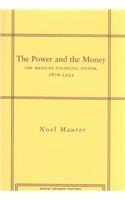
The Power and the Money: The Mexican Financial System, 1876-1932 (Social Science History)
📄 Viewing lite version
Full site ›
⌛ 🇮🇳 India pricing being fetched…
Prices will appear once fetched — usually within a few minutes.
View in:
🇺🇸 USA
Book Details
Author(s)Noel Maurer
PublisherStanford University Press
ISBN / ASIN0804742855
ISBN-139780804742856
CategoryBusiness & Economics
MarketplaceIndia 🇮🇳
Description ▲
More Books in Business & Economics
Business Cycles and Forecasting
View
Development Economics: Its Position in the Present Sta…
View
Cost Systems Design
View
So You Want to Dance on Broadway
View
The Blueprint: Reviving Innovation, Rediscovering Risk…
View
Managing IT Outsourcing, Second Edition
View
Education and the Creation of Capital in the Early Ame…
View
Global Corruption Report 2005: Special Focus: Corrupti…
View
More Tales for Trainers: Using Stories and Metaphors t…
View