Since the Hiroshima and Nagasaki attacks, no state has unleashed nuclear weapons. What explains this? According to the author, the answer lies in a prohibition inherent in the tradition of non-use, a time-honored obligation that has been adhered to by all nuclear states—thanks to a consensus view that use would have a catastrophic impact on humankind, the environment, and the reputation of the user.
The book offers an in-depth analysis of the nuclear policies of the U.S., Russia, China, the UK, France, India, Israel, and Pakistan and assesses the contributions of these states to the rise and persistence of the tradition of nuclear non-use. It examines the influence of the tradition on the behavior of nuclear and non-nuclear states in crises and wars, and explores the tradition's implications for nuclear non-proliferation regimes, deterrence theory, and policy. And it concludes by discussing the future of the tradition in the current global security environment.
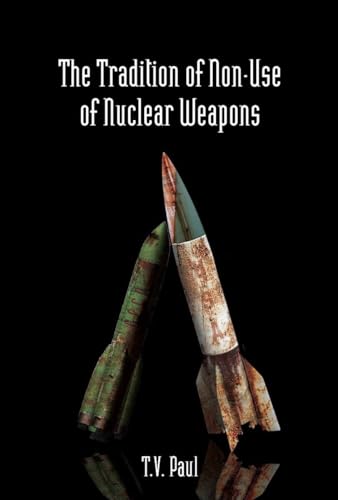
The Tradition of Non-Use of Nuclear Weapons (Stanford Security Studies)
📄 Viewing lite version
Full site ›
Book Details
Author(s)T.V. Paul
PublisherStanford Security Studies
ISBN / ASIN0804761310
ISBN-139780804761314
AvailabilityUsually ships in 24 hours
CategoryHardcover
MarketplaceUnited States 🇺🇸
Description ▲
More Books in Hardcover
The Call of the Wild (Puffin Classics)
View
Tacit and Explicit Knowledge
View
Performance, Ethics and Spectatorship in a Global Age …
View
Bad News - Volumes 1 and 2 (Routledge Revivals) (Routl…
View
Drug Transport in Antimicrobial and Anticancer Chemoth…
View
Out of Bounds: Anglo-Indian Literature and the Geograp…
View
The Voices of Romance: Studies in Dialogue and Charact…
View
Converging Streams: Art of the Hispanic and Native Ame…
View
What Handwriting Tells You About Yourself, Your Friend…
View