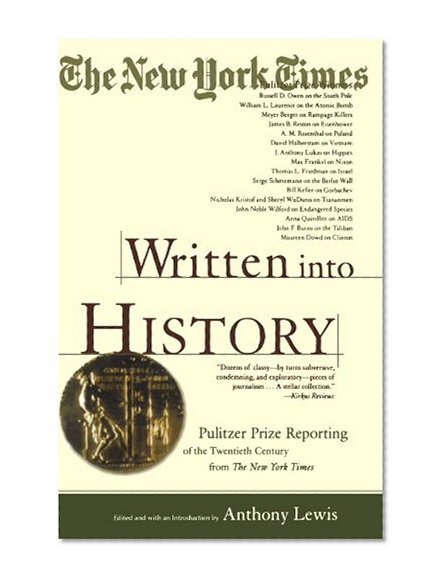
Taking in book reviews, commentaries on art and architecture, editorials, news pieces, and work that falls into the comparatively new genre of "news analysis," that sampling is more than a celebration of a single newspaper, influential though it may be; it is also a record of historical events as they have unfolded. An entry by Harrison Salisbury, for example, documents the Soviet Gulag system, "so routine, ordinary, and common ... that local residents seem not to have the slightest embarrassment about such phenomena." Another, by Sydney Schanberg, renders a surreal slice-of-life portrait of a Cambodian town undergoing round-the-clock shelling. Still another, by Nicholas Kristof, relates the tragedy of Tiananmen Square as "bullets swooshed overhead or glanced off buildings." Closer to home, the anthology also includes pieces on race relations in America, now-forgotten crimes, and the Reagan-era initiative to build the "Star Wars" antimissile system.
For readers with an interest in world history, contemporary affairs, and good writing alike, Lewis's anthology offers many rewards. --Gregory McNamee