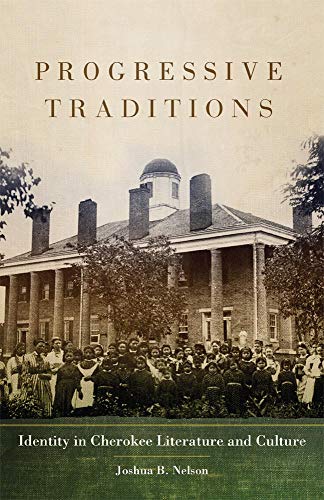
Progressive Traditions: Identity in Cherokee Literature and Culture (Volume 61) (American Indian Literature and Critical Studies Series)
📄 Viewing lite version
Full site ›
Book Details
Author(s)Nelson, Joshua B.
PublisherUniversity of Oklahoma Press
ISBN / ASIN0806144912
ISBN-139780806144917
AvailabilityIn stock
Sales Rank69,882
CategoryHistory
MarketplaceUnited States 🇺🇸
Description ▲
According to a dichotomy commonly found in studies of American Indians, some noble Native people defiantly defend their pristine indigenous traditions in honor of their ancestors, while others in weakness or greed surrender their culture and identities to white American economies and institutions. This traditionalist-versus-assimilationist divide is, Joshua B. Nelson argues, a false one. To make his case that American Indians rarely if ever conform to such simplistic identifications, Nelson considers the literature and culture of many Cherokee people.
Exploring a range of linked cultural practices and beliefs through the works of Cherokee thinkers and writers from the nineteenth century to today, Nelson finds ample evidence that tradition can survive through times of radical change: Cherokees do their cultural work both in progressively traditional and traditionally progressive ways. Studying individuals previously deemed either “traditional†or “assimilationist,†Nelson presents a more nuanced interpretation. Among the works he examines are the political rhetoric of Elias Boudinot, a forefather of American Indian literature, and of John Ross, the principal chief during the Removal years; the understudied memoirs of Catharine Brown, a nineteenth-century Cherokee convert to Christianity; and the novel Kholvn, by contemporary traditionalist Sequoyah Guess, a writer of peculiarly Cherokee science fiction.
Across several genres—including autobiography, fiction, speeches, laws, and letters—Progressive Traditions identifies an “indigenous anarchism,†a pluralist, community-centered political philosophy that looks to practices that preceded and surpass the nation-state as ways of helping Cherokee people prosper. This critique of the common call for expansion of tribal nations’ sovereignty over their citizens represents a profound shift in American Indian critical theory and challenges contemporary indigenous people to rethink power among nations, communities, and individuals.
More Books in History
The Bet, and Other Stories
View
Pakistan and the Bomb: Public Opinion and Nuclear Opti…
View
Writing National Histories: Western Europe Since 1800
View
Empire in Eclipse
View
Monks and Laymen in Byzantium, 843-1118
View
The Wilmington and Western Railroad (Images of Rail: D…
View
Black Sailor, White Navy: Racial Unrest in the Fleet d…
View
Feasibility of Laser Power Transmission to a High-Alti…
View
The Democratic Republic: 1801-1815
View