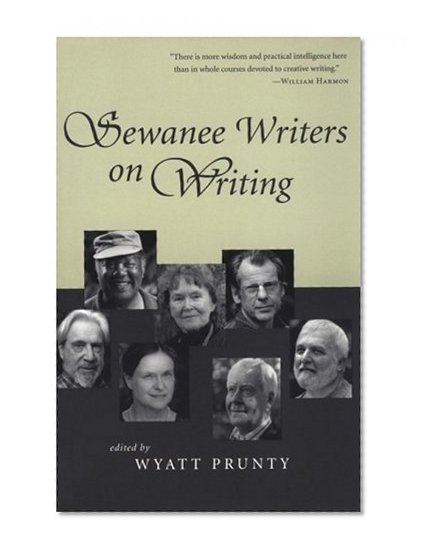
Sewanee Writers on Writing (Southern Literary Studies)
📄 Viewing lite version
Full site ›
Book Details
PublisherLsu Press
ISBN / ASIN0807126527
ISBN-139780807126523
AvailabilityUsually ships in 24 hours
Sales Rank408,692
MarketplaceUnited States 🇺🇸
Description ▲
In 1983, Sewanee, the University of the South, received a donation from Tennessee Williams's estate to be used to encourage "creative writing and creative writers." In 1989, poet Wyatt Prunty founded the Sewanee Writers' Conference, which meets on the rural Tennessee campus for two weeks each July. The 14 craft lectures gathered in Sewanee Writers on Writing were culled from those given--by Donald Justice, Romulus Linney, Francine Prose, and others--during the conference's first decade. This is a strange stew: there are fiction writers, poets, and playwrights; some of the essays are personal, others academic. Diane Johnson talks about finding one's subject; the question "write what?" she says, "does not automatically have an answer any more than a hunger pang comes complete with a slice of chocolate cake." Marsha Norman likens a play to a ski lift: "What you want from a ski lift is to get in, ride to the top of the mountain, get out, look at the view, say 'Wow,' and go home." Anthony Hecht and John Hollander contribute more scholarly pieces, about Auden and Frost, respectively. And Alice McDermott rails against the very thought of telling people how to write. "You can do whatever you can get away with," she says. McDermott cites Nabokov's Bend Sinister as proof, showing that the novel is full of examples "that would never pass muster in any number of writing workshops." Mishmash? Sure. But it works. Each morsel has a distinct flavor; together, they provide a wonderful sense of what it must be like to consort with these writers in a place that Prunty touts for its "remoteness without cultural dislocation." --Jane Steinberg