Search Books

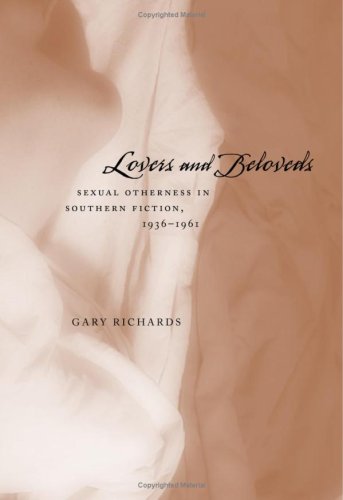
Lovers and Beloveds: Sexual Otherness in Southern Fiction, 1936-1961 (Southern Literary Studies)

Author Gary Richards
Publisher Louisiana State University Press
📄 Viewing lite version Full site ›
🌎 Shop on Amazon — choose country
44.95 USD
🛒 Buy New on Amazon 🇺🇸 🏷 Buy Used — $251.41
Share:
Book Details
Author(s)Gary Richards
ISBN / ASIN0807130516
ISBN-139780807130513
Sales Rank3,735,176
MarketplaceUnited States 🇺🇸

Description

A challenge to traditional criticism, this engaging study demonstrates that issues of sexuality—and same-sex desire in particular—were of central importance in the literary production of the Southern Renaissance. Especially during the end of that period—approximately the 1940s and 1950s—the national literary establishment tacitly designated the South as an allowable setting for fictionalized deviancy, thus permitting southern writers tremendous freedom to explore sexual otherness. In Lovers and Beloveds, Gary Richards draws on contemporary theories of sexuality in reading the fiction of six writers of the era who accepted that potentially pejorative characterization as an opportunity: Truman Capote, William Goyen, Harper Lee, Carson McCullers, Lillian Smith, and Richard Wright.

Richards skillfully juxtaposes forgotten texts by those writers with their canonical works to identify the complex narratives of same-sex desire. In their novels and stories, the authors consistently reimagine gender roles, centralize homoeroticism, and probe its relationship with class, race, biological sex, and southern identity. These works, Richards argues, do not constitute a coherent gay literary tradition for the region but nevertheless frustrate efforts to define southern literature along conventional lines.

This is the first book to assess the significance of same-sex desire in a broad range of southern texts, making a crucial contribution to the study of both literature and sexuality. Highly readable and thoughtful in its arguments, Lovers and Beloveds reorients southern literature’s outsider status as—not detrimental to its vitality but—liberating indeed.

Includes discussion of Other Voices, Other Rooms (1948); The House of Breath (1950); "Big Boy Leaves Home" (1936); The Long Dream (1958); Strange Fruit (1944); One Hour (1959); To Kill a Mockingbird (1960); The Heart Is a Lonely Hunter (1940); Reflections in a Golden Eye (1941); The Ballad of the Sad Café (1943); and Clock Without Hands (1961).