Search Books
A Time to Speak Out: Indepe… A Guerrilla Osyssey: Modern…

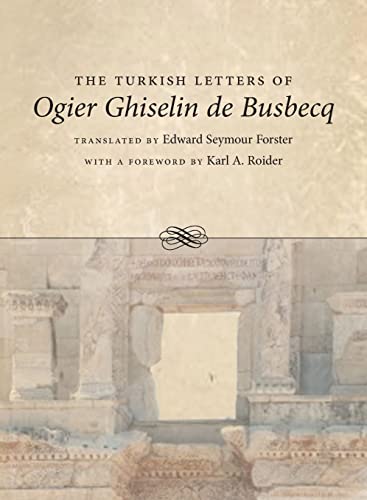
The Turkish Letters of Ogier Ghiselin de Busbecq, Imperial Ambassador at Constantinople, 1554-1562: Translated from the Latin of the Elzevir Edition of 1663

Author Ogier Ghislain de Busbecq
Publisher Louisiana State University Press
Category History
📄 Viewing lite version Full site ›
🌎 Shop on Amazon — choose country
17.60 19.95 USD
🛒 Buy New on Amazon 🇺🇸 🏷 Buy Used — $4.50

✓ Usually ships in 24 hours

Share:
Book Details
ISBN / ASIN0807130710
ISBN-139780807130711
AvailabilityUsually ships in 24 hours
Sales Rank365,665
CategoryHistory
MarketplaceUnited States 🇺🇸

Description

A native of western Flanders, Ogier Ghiselin de Busbecq served in several posts as diplomatic representative for the Habsburg ruler Ferdinand I (King of Bohemia and Hungary, 1526–64, and Holy Roman Emperor, 1556–64). Busbecq’s most famous mission was undoubtedly to the Ottoman Empire at the zenith of its power and glory during the reign of Suleiman the Magnificent. In four letters to his friend Nicholas Michault—who had been Busbecq’s fellow student in Italy and afterwards was imperial ambassador to the Portuguese court—he details impressions on everything he saw and experienced in Turkey, including landscapes, plants, animals, Islam, ethnic groups, architecture, slavery, military matters, court practices, clothing, gender and domestic relations, and the Sultan himself.

Suleiman (spelled Soleiman in the translation) the Magnificent is perhaps the most distinguished figure in Turkish history, and his reign saw the greatest extension of Turkish power. His devotion to his own religion and his tolerance of other faiths, his munificence and generosity, won him the fidelity of his subjects and the respect of his enemies. Busbecq was given the assignment of using diplomacy to check the raids of the Turks into Hungary, and he proved very effective with his quick sympathy, appreciation of the Turkish character, and untiring patience. He returned from Constantinople in the autumn of 1562 with an established reputation as a diplomatist.

The Turkish Letters is a treasure of early travel literature, reflecting Busbecq’s rich literary talent, classical education, love for collecting antiquities, and remarkable power of observation. Delightfully entertaining reading, it also offers invaluable lessons on understanding and bridging cultural divides.

Edward Seymour Forster (1879–1950) was a lecturer in classics at the University of Sheffield from 1905 to 1945. He translated a number of Aristotle’s works as well as other ancient texts for publication in the Loeb Classical Library series. He also wrote several books, including A Short History of Modern Greece. His translation of The Turkish Letters first appeared in 1927.

The Bet, and Other Stories
View
Pakistan and the Bomb: Public Opinion and Nuclear Opti…
View
Writing National Histories: Western Europe Since 1800
View
Empire in Eclipse
View
Monks and Laymen in Byzantium, 843-1118
View
The Wilmington and Western Railroad (Images of Rail: D…
View
Black Sailor, White Navy: Racial Unrest in the Fleet d…
View
Feasibility of Laser Power Transmission to a High-Alti…
View
The Democratic Republic: 1801-1815
View