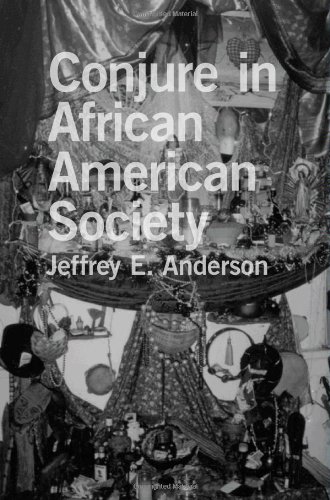
Though some may see the study of conjure as a perpetuation of old stereotypes that depict blacks as slaves to superstition, the truth, Anderson notes, is far more complex. Drawing on folklore, fiction and nonfiction, music, art, and oral interviews, he explores various portrayals of the conjurer—backward buffoon, rebel against authority, and symbol of racial pride. He also examines the actual work performed by conjurers, including the use of pharmacologically active herbs to treat illness, psychology to ease mental ailments, fear to bring about the death of enemies and acquittals at trials, and advice to encourage clients to succeed on their own.
Conjure's ability to merge supernaturalism and religion—along with a widespread belief in, fear of, or respect for conjure's effectiveness—has made it a force across generations, Anderson shows, and not only among blacks. New Age spiritualism, Afro-Caribbean syncretic faiths, and modern psychological understandings of magic have all contributed to a recent revival of conjure.
By critically examining the many influences that have shaped conjure over time, Anderson effectively redefines magic as a cultural power, one that has profoundly touched the arts, black Christianity, and American society overall.