Search Books
Engineers: A History of Eng…

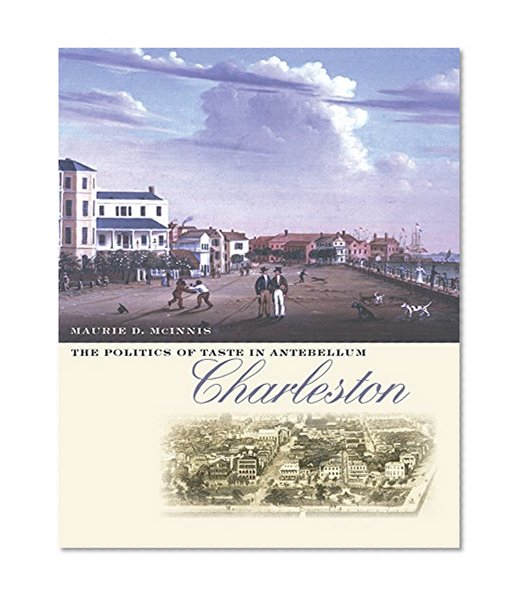
Politics of Taste in Antebellum Charleston

Author Maurie D. McInnis
Publisher The University of North Carolina Press
Category Architecture
📄 Viewing lite version Full site ›
🌎 Shop on Amazon — choose country
⌛ 🇫🇷 France pricing being fetched… Prices will appear once fetched — usually within a few minutes.
Share:
Book Details
ISBN / ASIN080782951X
ISBN-139780807829516
CategoryArchitecture
MarketplaceFrance 🇫🇷

Description

At the close of the American Revolution, Charleston, South Carolina, was the wealthiest city in the new nation, with the highest per-capita wealth among whites and the largest number of enslaved residents. Maurie D. McInnis explores the social, political, and material culture of the city to learn how--and at what human cost--Charleston came to be regarded as one of the most refined cities in antebellum America.

While other cities embraced a culture of democracy and egalitarianism, wealthy Charlestonians cherished English notions of aristocracy and refinement, defending slavery as a social good and encouraging the growth of southern nationalism. Members of the city's merchant-planter class held tight to the belief that the clothes they wore, the manners they adopted, and the ways they designed house lots and laid out city streets helped secure their place in social hierarchies of class and race. This pursuit of refinement, McInnis demonstrates, was bound up with their determined efforts to control the city's African American majority. She then examines slave dress, mobility, work spaces, and leisure activities to understand how Charleston slaves negotiated their lives among the whites they served.

The textures of lives lived in houses, yards, streets, and public spaces come into dramatic focus in this lavishly illustrated portrait of antebellum Charleston. McInnis's innovative history of the city combines the aspirations of its would-be nobility, the labors of the African slaves who built and tended the town, and the ambitions of its architects, painters, writers, and civic promoters.

Dynamics of Pavement Structures
View
Compact City Series: Achieving Sustainable Urban Form
View
Invisible Acts of Power: Channeling Grace in Your Ever…
View
Movements in Green: Conceptual Landscape Gardening
View
Building After Auschwitz: Jewish Architecture and the …
View
The Four Elements of Architecture and Other Writings (…
View
Some Assembly Required
View
The Architecture of O'Neil Ford: Celebrating Place
View
Art/Women/California, 1950-2000: Parallels and Interse…
View