Greene suggests that this concept of American societies as exceptional was a central component in their emerging identity. The success of the American Revolution helped subordinate Americans' long-standing sense of cultural inferiority to a more positive sense of collective self that sharpened and intensified the concept of American exceptionalism.
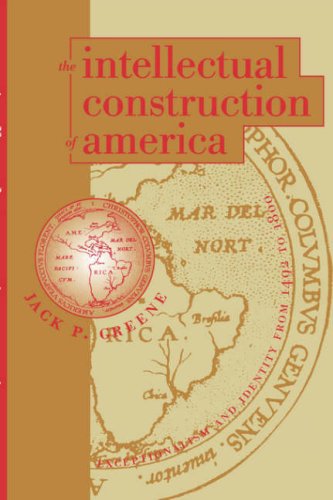
Intellectual Construction of America
📄 Viewing lite version
Full site ›
⌛ 🇫🇷 France pricing being fetched…
Prices will appear once fetched — usually within a few minutes.
View in:
🇺🇸 USA
Book Details
Author(s)Jack P. Greene
ISBN / ASIN0807846317
ISBN-139780807846315
CategoryHistory
MarketplaceFrance 🇫🇷
Description ▲
Jack Greene explores the changing definitions of America from the time of Europe's first contact with the New World through the establishment of the American republic. Challenging historians who have argued that colonial American societies differed little from those of early modern Europe, he shows that virtually all contemporary observers emphasized the distinctiveness of the new worlds being created in America. Rarely considering the high costs paid by Amerindians and Africans in the construction of those worlds, they cited the British North American colonies as evidence that America was for free people a place of exceptional opportunities for individual betterment and was therefore fundamentally different from the Old World.
More Books in History
The Bet, and Other Stories
View
Pakistan and the Bomb: Public Opinion and Nuclear Opti…
View
Writing National Histories: Western Europe Since 1800
View
Empire in Eclipse
View
Monks and Laymen in Byzantium, 843-1118
View
The Wilmington and Western Railroad (Images of Rail: D…
View
Black Sailor, White Navy: Racial Unrest in the Fleet d…
View
Feasibility of Laser Power Transmission to a High-Alti…
View
The Democratic Republic: 1801-1815
View