After thirty years of anticolonial struggle against Spain and four years of military occupation by the United States, Cuba formally became an independent republic in 1902. The nationalist coalition that fought for Cuba's freedom, a movement in which blacks and mulattoes were well represented, had envisioned an egalitarian and inclusive country--a nation for all, as Jose Marti described it. But did the Cuban republic, and later the Cuban revolution, live up to these expectations?
Tracing the formation and reformulation of nationalist ideologies, government policies, and different forms of social and political mobilization in republican and postrevolutionary Cuba, Alejandro de la Fuente explores the opportunities and limitations that Afro-Cubans experienced in such areas as job access, education, and political representation. Challenging assumptions of both underlying racism and racial democracy, he contends that racism and antiracism coexisted within Cuban nationalism and, in turn, Cuban society. This coexistence has persisted to this day, despite significant efforts by the revolutionary government to improve the lot of the poor and build a nation that was truly for all.
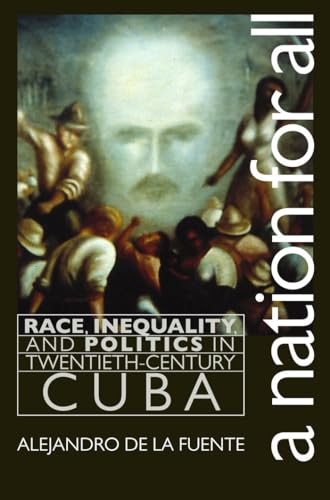
A Nation for All (Envisioning Cuba)
📄 Viewing lite version
Full site ›
Book Details
Author(s)Alejandro de la Fuente
ISBN / ASIN0807849227
ISBN-139780807849224
AvailabilityUsually ships in 24 hours
Sales Rank746,977
CategoryHistory
MarketplaceUnited States 🇺🇸
Description ▲
More Books in History
Tutankhamen, Amenism, Atenism and Egyptian Monotheism,…
View
Barefoot on Crane Island: A Fond Reminiscence of Lake …
View
Critical Essays on Israeli Society, Religion, and Gove…
View
Flashpoint in Ukraine: How the US Drive for Hegemony R…
View
Militancy and Violence in West Africa (Contemporary Se…
View
The Confessions of Edward Isham: A Poor White Life of …
View
A Nation Transformed: England after the Restoration
View
Bunyan'S Devotional Works. the Spirit of Prayer: the S…
View