Most accounts date the birth of American abolitionism to 1831, when William Lloyd Garrison began publishing his radical antislavery newspaper, The Liberator. In fact, however, the abolition movement had been born with the American Republic. In the decades following the Revolution, abolitionists worked steadily to eliminate slavery and racial injustice, and their tactics and strategies constantly evolved. Tracing the development of the abolitionist movement from the 1770s to the 1830s, Richard Newman focuses particularly on its transformation from a conservative lobbying effort into a fiery grassroots reform cause.
What began in late-eighteenth-century Pennsylvania as an elite movement espousing gradual legal reform began to change in the 1820s as black activists, female reformers, and nonelite whites pushed their way into the antislavery movement. Located primarily in Massachusetts, these new reformers demanded immediate emancipation, and they revolutionized abolitionist strategies and tactics--lecturing extensively, publishing gripping accounts of life in bondage, and organizing on a grassroots level. Their attitudes and actions made the abolition movement the radical cause we view it as today.
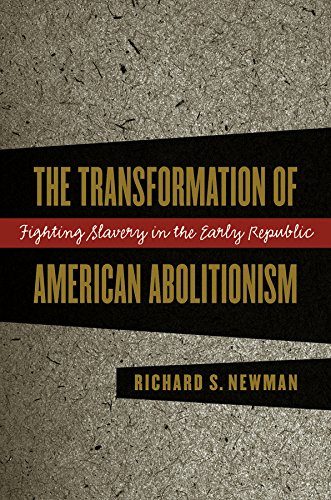
The Transformation of American Abolitionism: Fighting Slavery in the Early Republic
📄 Viewing lite version
Full site ›
Book Details
Author(s)Richard S. Newman
ISBN / ASIN0807849987
ISBN-139780807849989
AvailabilityUsually ships in 24 hours
Sales Rank1,337,951
CategoryHistory
MarketplaceUnited States 🇺🇸
Description ▲
More Books in History
Tutankhamen, Amenism, Atenism and Egyptian Monotheism,…
View
Barefoot on Crane Island: A Fond Reminiscence of Lake …
View
Critical Essays on Israeli Society, Religion, and Gove…
View
Flashpoint in Ukraine: How the US Drive for Hegemony R…
View
Militancy and Violence in West Africa (Contemporary Se…
View
The Confessions of Edward Isham: A Poor White Life of …
View
A Nation Transformed: England after the Restoration
View
Bunyan'S Devotional Works. the Spirit of Prayer: the S…
View