Search Books
The Green Revolution: The A… The Discourse of Domination…

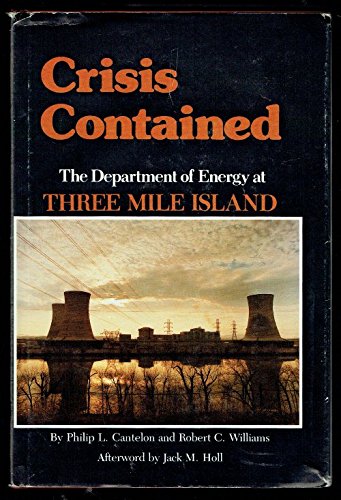
Crisis Contained: The Department of Energy at Three Mile Island (SCIENCE AND INTERNATIONAL AFFAIRS)

Author Cantelon, Philip L.
Publisher Southern Illinois University Press
Category Political Science
📄 Viewing lite version Full site ›
🌎 Shop on Amazon — choose country
25.53 USD
🛒 Buy New on Amazon 🇺🇸

✓ In Stock.

Share:
Book Details
ISBN / ASIN0809310791
ISBN-139780809310791
AvailabilityIn Stock.
Sales Rank1,855,151
MarketplaceUnited States 🇺🇸

Description

“What escaped at Three Mile Island was not only radiation, but, more importantly for the nuclear power industry, public confi­dence in technology and technocracy,” report Cantelon and Wil­liams in their detailed account of the response of the Department of Energy to America’s worst civilian nuclear power accident.


What happened at Three Mile Island was a technological failure of monstrous proportions. “Yet,” the authors contend, “the serious extent of the accident was caused by human error: technocrats blundered, lost control of technology, and, refusing to admit it,gave confusing, inconsistent, and jargon-laden explanations.” There was a welter of information and misinformation. To sift out the truth that would enable them to write the history of this contem­porary event, Cantelon and Williams relied on unpublished archi­val materials—including logs of scientists and government officials—on oral interviews with participants, and on reports of other government agencies. The result is a significant history, one that shows how scientists and politicians responded to the un­believable and unexpected as they tried to deal with a highly tech­nical event in the glare of television lights and under the inquisitive and fearful eyes of the public.


The danger was never real, yet for the nation and certainly for the immediate community around Three Mile Island, risk per­ceived was risk endured. Many of the residents of what became a “war zone” will never be the same, though radiation never touched them. Imagination and unconscious fears were far more important than any accurate perception of risk after a Nuclear Regulatory Commission official usedthe term meltdown at a Friday afternoon news conference.

America Alone: The End of the World as We Know It
View
Holy War, Inc.: Inside the Secret World of Osama bin L…
View
Piero Gobetti and the Politics of Liberal Revolution (…
View
Criminal Justice Internships, Seventh Edition: Theory …
View
Israel and the Legacy of Harry S. Truman (Truman Legac…
View
Black Belt Patriotism: How to Reawaken America
View
Europe's Last Frontier?: Belarus, Moldova, and Ukraine…
View
Actuarial Mathematics (035) (Proceedings of Symposia i…
View