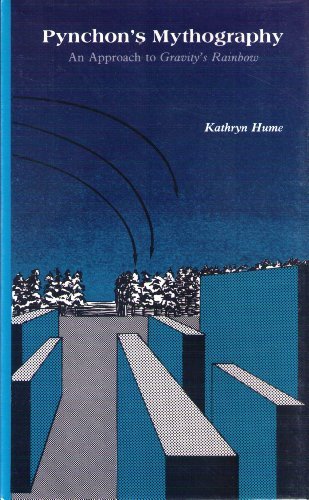
The exhausting plenitude of loosely connected detail in Gravity’s Rainbow makes it a favorite of postmodern critics, who claim it describes a modern, random, unknowable universe. Hume expands the possibilities as she discloses a mythic structure that underlies Pynchon’s work and provides easier access to his world.
Â
“Myth turns chaos into cosmos,†Hume explains, describing how the profuse detail of Pynchon’s book allows for the creation of a “world humankind shapes out of chaos by means of ritual and myth. . . a set of interlocking stories. . . [that] fit into a narrative sequence or mythology that conveys, supports, and challenges cultural values.â€
Â
Pynchon’s “mythology is not rigidly consistent,†Hume notes, but “several strands of mythological action. . . serve a stabilizing function in this chaotic book.†Pynchon creates his own “unheroic†hero to show the way for making sense of the fragmented experience of life in the postmodern world.