David Hinton, whose much-acclaimed translations of Li Po and Tu Fu have become classics, now completes the triumvirate of China's greatest poets with The Selected Poems of Wang Wei.
Wang Wei (701-761 C.E.) is often spoken of, with his contemporaries Li Po and Tu Fu, as one of the three greatest poets in China's 3,000-year poetic tradition. Of the three, Wang was the consummate master of the short imagistic landscape poem that came to typify classical Chinese poetry. He developed a nature poetry of resounding tranquility wherein deep understanding goes far beyond the words on the page a poetics that can be traced to his assiduous practice of Ch'an (Zen) Buddhism. But in spite of this philosophical depth, Wang is not a difficult poet. Indeed, he may be the most immediately appealing of China's great poets, and in Hinton's masterful translations he sounds utterly contemporary. Many of his best poems are incredibly concise, composed of only twenty words, and they often turn on the tiniest details: a bird's cry, a splinter of light on moss, an egret's wingbeat. Such imagistic clarity is not surprising since Wang was also one of China's greatest landscape painters. This is a breathtaking poetry, one that in true Zen fashion renders the ten thousand things of this world in such a way that they empty the self even as they shimmer with the clarity of their own self-sufficient identity.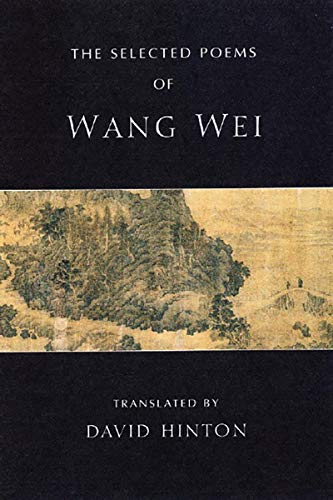
The Selected Poems of Wang Wei
📄 Viewing lite version
Full site ›
Book Details
Author(s)Wei, Wang
PublisherNew Directions
ISBN / ASIN0811216187
ISBN-139780811216180
AvailabilityIn Stock.
Sales Rank769,209
CategoryLiterary Criticism
MarketplaceUnited States 🇺🇸
Description ▲
More Books in Literary Criticism
Egyptian Literature
View
Utopia Paraiso E Historia: Inscripciones Del Mito En G…
View
Nation, State, and Empire in English Renaissance Lite…
View
On the Outskirts of Form: Practicing Cultural Poetics
View
Genre at the Crossroads: The Challenge of Fantasy
View
Profiles in Canadian Drama: James Reaney
View
Monty Python, Shakespeare and English Renaissance Drama
View
Modes of Faith: Secular Surrogates for Lost Religious …
View
Latino Los Angeles in Film and Fiction: The Cultural P…
View